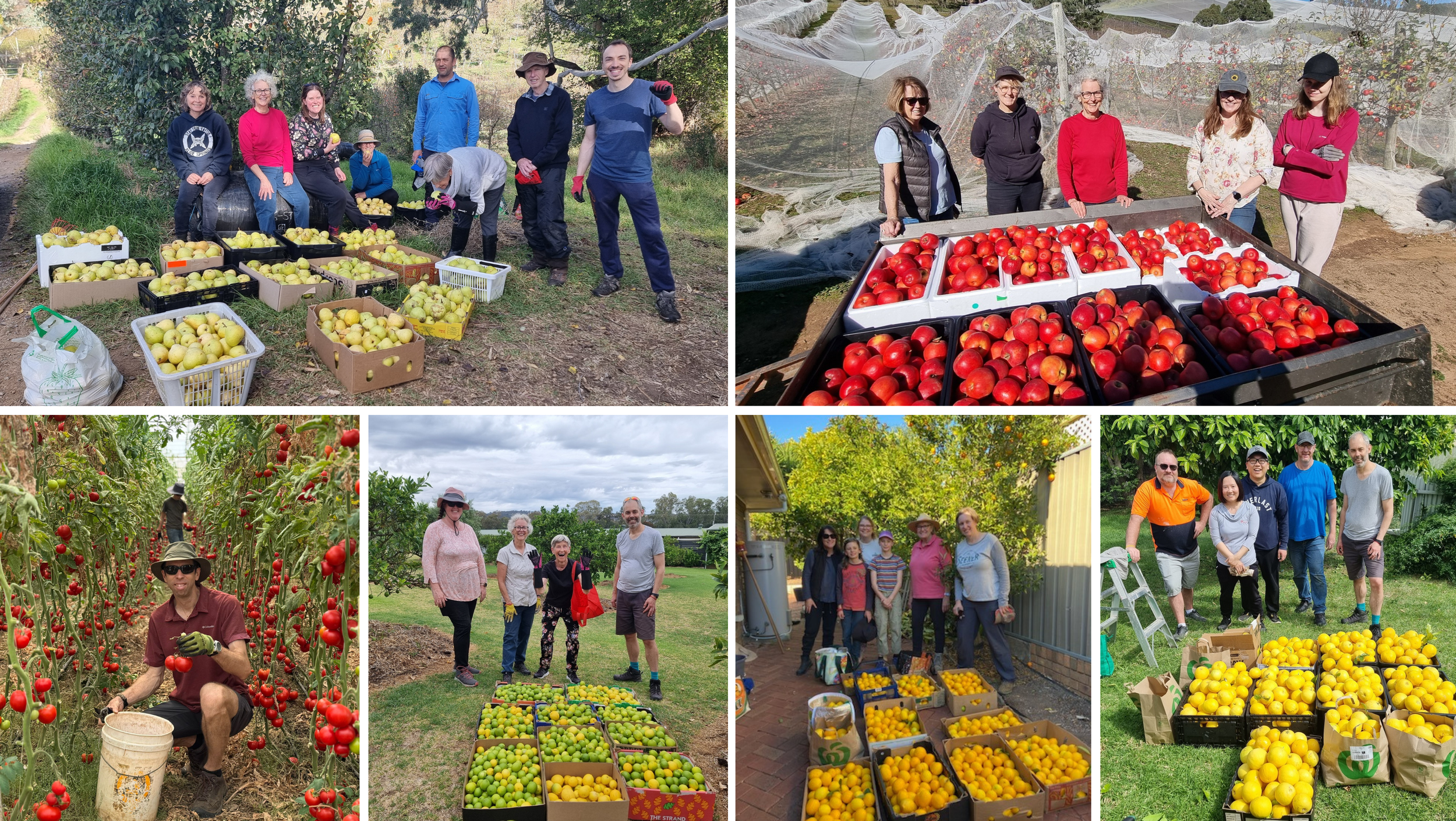
Author: chris

  • Caring for stone fruit trees

    Stone fruit trees can be productive additions to South Australian gardens, but they need regular care to produce well. Peaches, nectarines, plums and apricots all require attention to pruning, watering and feeding throughout the year. Here’s what you need to know to keep your stone fruit trees healthy and productive.

    What stone fruit trees need

    South Australia’s climate is well-suited to stone fruit growing. These trees prefer cold winters and warm, dry summers, conditions we reliably get here. This makes growing peaches, nectarines, plums, and apricots in your backyard more straightforward than in many other regions.

    Getting pruning right

    Timing matters when it comes to pruning stone fruit. The most important thing is to prune on a warm, dry day, ideally with some breeze. This helps the cuts dry out quickly and prevents bacterial infections and canker from developing.

    For established stone-fruit trees, summer pruning is an effective method for controlling and managing tree size. Young trees are better suited to winter pruning, as this timing promotes the vigorous growth they need during development.

    Different stone fruits need pruning at different times:

    • Peaches and nectarines: Prune new growth lightly in summer, then complete the main prune in autumn

    • Apricots and cherries: Prune in summer, after harvest.

    • Plums: Prune in summer, once you’ve picked the fruit

    The goal is to create an open, vase-like shape with four or five main branches spreading outward. This allows light and air to reach through the tree. One crucial point to remember is that peaches and nectarines produce fruit on the previous season’s wood, so avoid cutting off all of last year’s growth or you could lose your next harvest.

    The new season’s growth should be pruned back by a third to a half and thinned out if too congested.  Peaches and nectarines need to be pruned every year to ensure consistent fruiting.  

    Apricots fruit on 3-4 year old wood and Plums fruit on 1-3 year old wood.

    The summer prune should be a light prune, being careful not to expose the tree to sunburn.

    Some trees may require further pruning in the winter to improve the tree structure.

    Note that Apricot and Cherry trees should never be pruned in the winter.

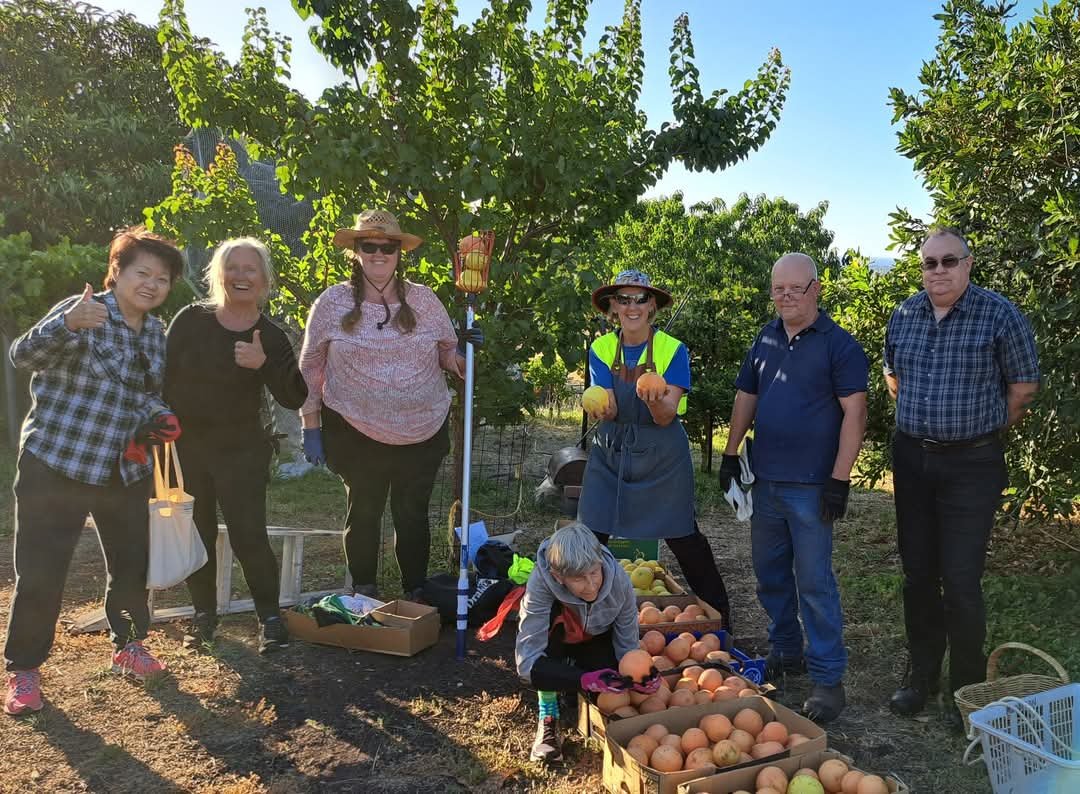
     Nectarine harvest in Maslin Beach
    Nectarine harvest in Maslin Beach

    Watering through the seasons

    In Adelaide’s climate, consistent watering is essential. When rainfall is low, give your trees a thorough soak once a week. Mulching around the base helps retain moisture in the soil.

    Regular watering is particularly important during flowering and fruit development. Water stress during these periods can lead to fruit drop or poor quality harvests. Deep watering encourages roots to grow deeper rather than staying shallow, which helps trees cope better with hot summer conditions.

    Feeding your trees

    Stone fruit trees are heavy feeders. Once your tree starts producing fruit, fertilise three times annually in winter, spring and summer. Use a well-balanced organic fertiliser, specifically formulated for fruit trees, applying a good handful per square metre from the trunk to about a metre beyond the canopy edge.

    At the end of winter, apply two handfuls of organic-based pelletised plant food around the root zone and water it in well. This provides the nutrients trees need for healthy growth and quality fruit production.

    Share your surplus

    If you find yourself with more stone fruit than you can use, consider registering your tree with Fruit Share Adelaide. We connect tree owners with volunteers who harvest surplus fruit and distribute it to food relief organisations across Adelaide.

    Proper care throughout the season means you’ll have quality fruit ready to share with the community when harvest time arrives. Whether you’re enjoying fresh fruit yourself or helping feed others, well-maintained stone fruit trees benefit everyone.

  • 2025: A Fruitful Year

    What a year it’s been! As 2025 draws to a close, we’re reflecting on twelve months of incredible growth, community connection, and impact. From backyard fruit trees to productive orchards across Adelaide and the Hills, Fruit Share Adelaide has had its most successful year yet – and it’s all thanks to our amazing volunteers, generous tree owners, and dedicated partner organisations.

    The proof is in the produce

    Since launching in January 2024, Fruit Share Adelaide has now rescued and redistributed 31,880 kilograms of fresh produce across South Australia. This year alone, we’ve surpassed 20,000kg, nearly doubling our first year’s harvest and proving that community-driven food rescue is not just viable, it’s thriving.

    Our 302 harvests have taken us to 203 locations throughout Adelaide and the Hills. Each harvest represents a tree owner who chose to share rather than waste, a volunteer who gave their time, and a food relief organisation ready to serve those in need.

    The variety of produce we’ve rescued reflects Adelaide’s incredible growing conditions:

    • Citrus: 12,065kg – lemons, oranges, mandarins, grapefruit, and limes

    • Pome Fruit: 11,050kg – mainly apples and pears

    • Vegetables: 7,680kg – predominantly tomatoes from generous backyard gardeners

    • Stone Fruit: 535kg

    • Other Produce: 550kg

    Our top crops? Apples lead the way at 8,710kg, followed by tomatoes (6,940kg), lemons (4,050kg), oranges (3,320kg), mandarins (1,780kg), grapefruit (1,700kg), pears (1,660kg), and limes (1,090kg). Every kilogram represents food that nourished someone in our community rather than rotting in landfill.

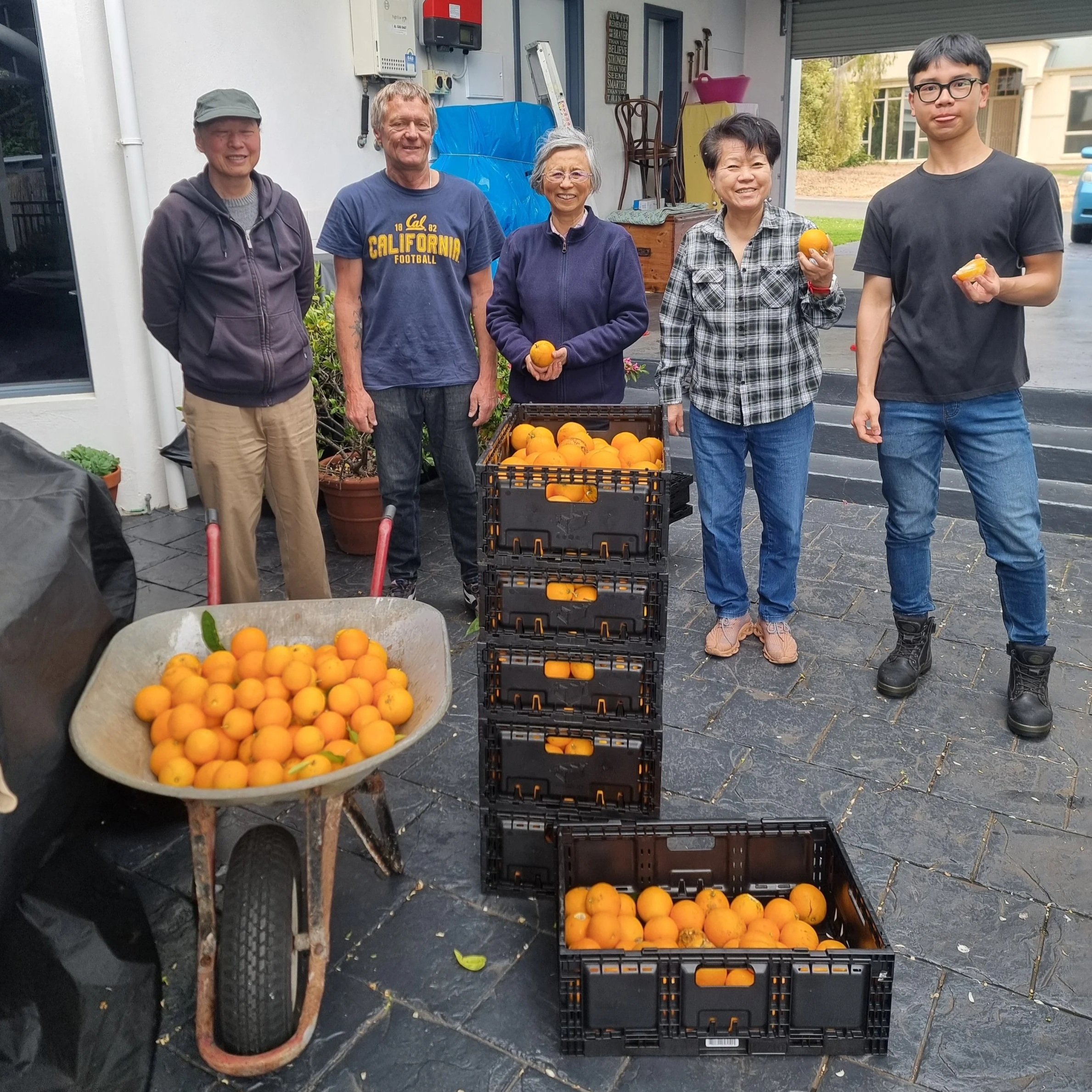
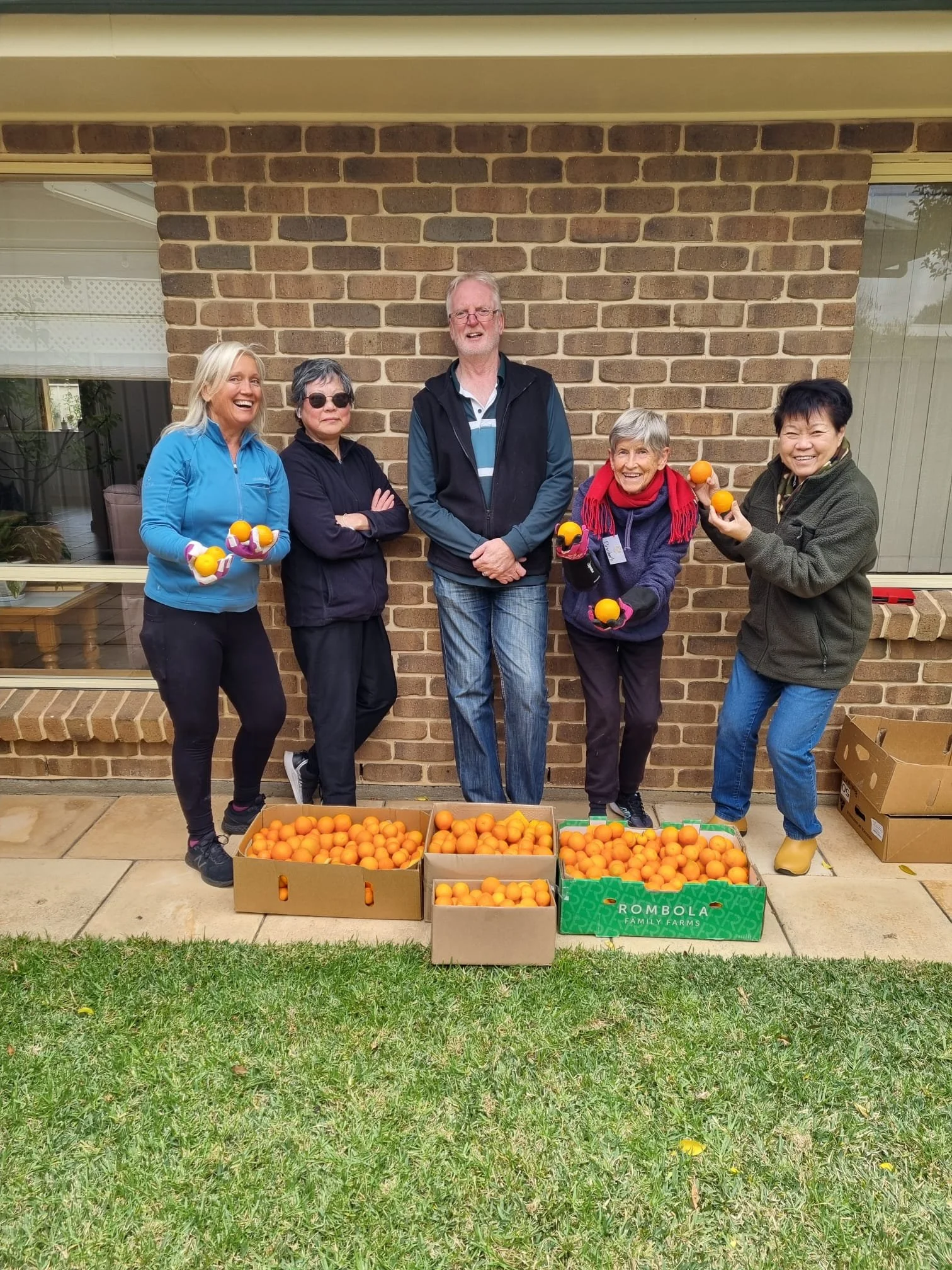
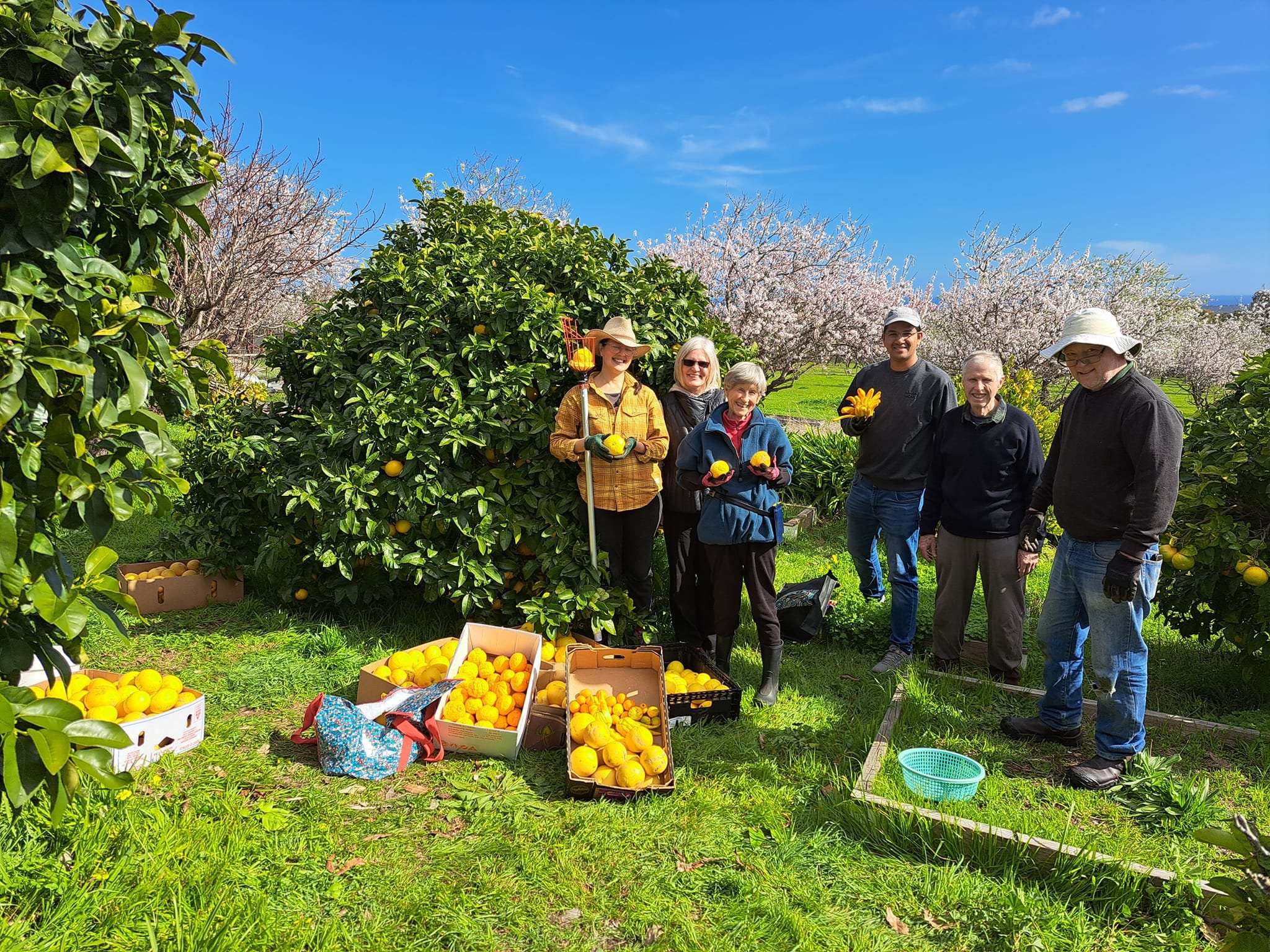
     Orange harvest in Panorama
    Orange harvest in Panorama

    Our growing community

    So far, 247 people registered as volunteers, with over 100 actively participating in harvests throughout 2025. From seasoned pickers who’ve been with us since the beginning to first-timers discovering the joy of community harvesting, our Fruit Heroes are the backbone of everything we do.

    Whether spending a morning picking fruit, delivering crates to food relief centres, or staffing our stall at community events, each volunteer embodies the spirit of generosity and connection that defines Fruit Share Adelaide. To every single person who pulled on gloves, climbed a ladder, or sorted produce this year – thank you. 

    Partnerships that make it happen

    Our network of food relief organisations has grown to 136 registered partners, with 80 actively receiving produce to support their communities. From emergency relief providers to community kitchens, neighbourhood pantries to schools, these partnerships ensure that rescued produce reaches those who need it most.

    Building stronger foundations

    This year, we’ve been fortunate to receive critical support that’s helping us grow sustainably. The Suzanne Elliott Trust generously donated $5,000 to help us implement new software systems and build our organisational foundations. Their additional support has also provided branded Fruit Share Adelaide apparel for our team and a laptop to help run operations more efficiently. We’re also grateful to the Mackintosh Family subfund through Foundations SA for their $3,000 donation toward the same goal.

    These funds are enabling us to implement two purpose-built platforms – Common Fruit for managing harvest scheduling and volunteer coordination, and Better Impact for streamlining volunteer onboarding and engagement – which should be up and running in early 2026. These digital tools mean we can rescue more produce, coordinate our growing volunteer base more efficiently, and supply more food relief organisations across Adelaide.

    Connecting across Adelaide

    Beyond the harvests, 2025 saw us actively engaging with communities across the city. We attended markets, fairs, and events throughout the year, including the Hutt St Market, Connecting Community Event in Enfield, Meadows Country Fair, and the Tea Tree Gully Sustainability Fair, among others.

    Each event gave us opportunities to meet potential tree owners, meet new volunteers, and share our message about turning backyard abundance into community nourishment. The enthusiasm we encountered reminds us that more people than ever want to be part of practical, local solutions to food waste.

    Thank you

    This year’s success belongs to everyone who’s been part of the journey. To the tree owners who registered their fruit trees, the volunteers who turned up to harvests, and the partner organisations distributing produce to those who need it – thank you. To the councils, businesses, and supporters who’ve backed our work – we appreciate your ongoing commitment to reducing food waste and strengthening community food security.

    Looking to 2026

    As we head into the new year, the stone fruit season is ramping up and we’re ready for what promises to be another period of growth. 

    Here’s to keeping the momentum going in 2026. With your continued support, we’ll keep turning surplus fruit into community nourishment, one harvest at a time.

  • Hand in Hand for Better Foods and a Better Future

    This World Food Day, we are celebrating the partnerships that make fresh, nutritious food accessible across Adelaide

    World Food Day’s 2025 theme, “Hand in Hand for Better Foods and a Better Future,” perfectly captures what happens when communities work together to fight food insecurity. Since January 2024, Fruit Share Adelaide has rescued over 30,000 kilograms of fresh produce from backyards and farms across South Australia, distributing it to more than 70 partner food relief organisations. However, the real impact isn’t just measured in kilograms – it’s in the collaborative spirit that drives our food rescue network.

    We spoke with some of our partner organisations to understand how these partnerships strengthen food security and reduce waste across Adelaide.

    Fresh produce makes all the difference

    For many food relief organisations, securing enough fresh fruit and vegetables is an ongoing challenge. Derek Gladigau from Oasis Family Church puts it plainly: “We cannot get enough food to service the requirements of our client base. Anything Fruit Share Adelaide is able to give us helps our community and those battling food insecurity.”

    Hannah Jewell from Macclesfield Community Pantry echoes this, explaining that they receive variable amounts of fresh produce through other channels. “Any and all fresh produce donated to the pantry reduces how much we need to buy with our funds. We receive no regular funding and rely on donations.”

    For OzHarvest’s Stefan Arkadianos, the partnership enhances their capacity significantly: “Fruit Share Adelaide enhances our ability to support the community by supplying high-quality fresh fruit to our free on-site market and to the 130 agencies we assist each week.”

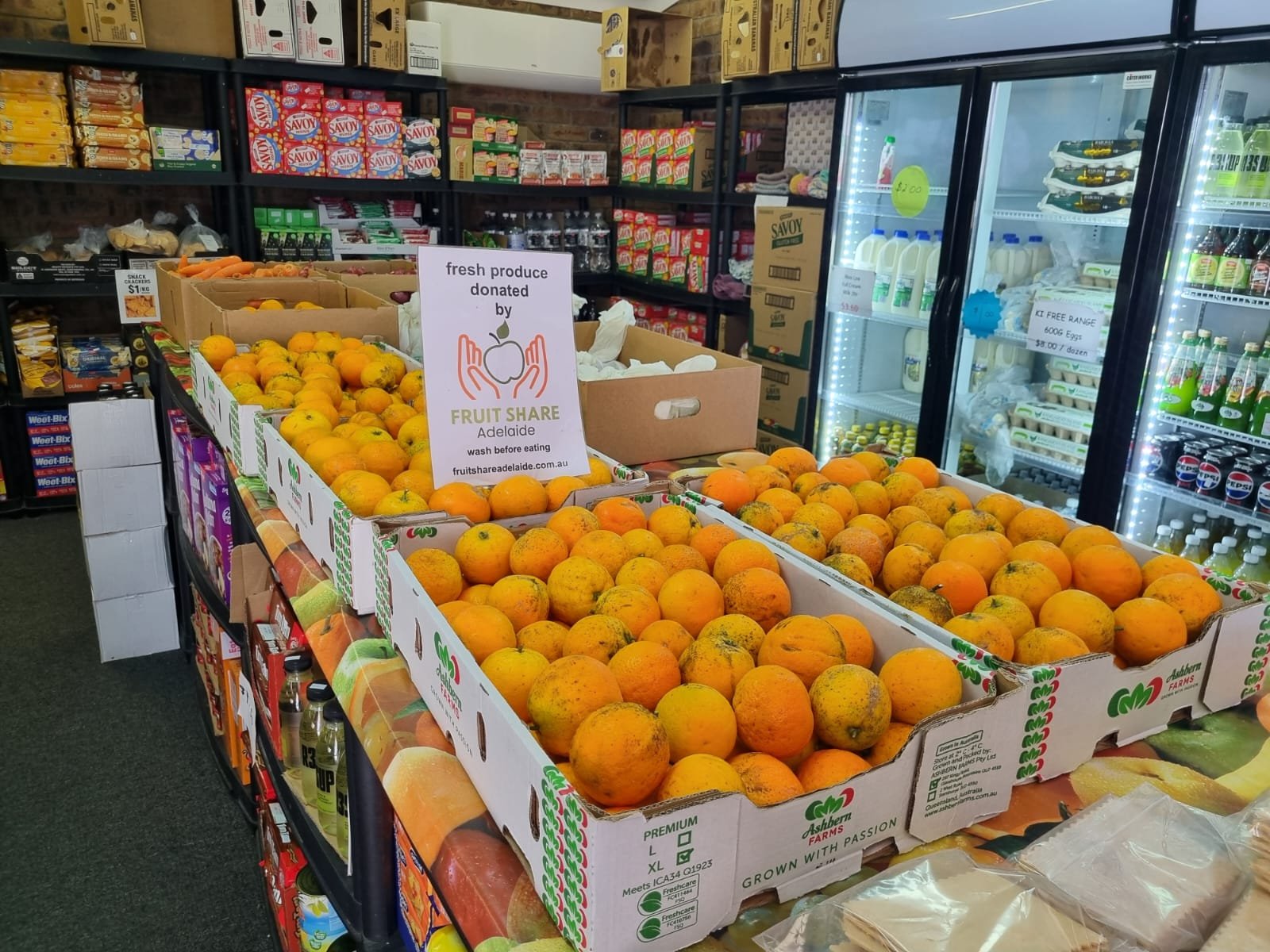
     Orange donation at Oasis Food Pantry
    Orange donation at Oasis Food Pantry

    Why fresh, nutritious food matters

    Access to quality food isn’t just about filling bellies, it’s about nourishment and dignity. As Hannah from Macclesfield Community Pantry explains, “Unfortunately, it is cheaper to eat unhealthy food and processed food. We want to help people eat better, fresher food to be healthier and happier. When people are well nourished, they are going to have better physical and mental health.”

    OzHarvest takes this commitment seriously, maintaining a food balance of 90% or higher. “People experiencing food insecurity often lack the means to obtain healthy options -directly impacting their health,” Stefan notes. “The food we provide is both nourishing and supporting of long-term wellbeing.”

    The dual impact: Fighting waste and hunger

    Every piece of rescued fruit serves a double purpose. OzHarvest rescues over 25,000 kilograms of food each week in Adelaide alone, giving surplus food a second life while supporting those facing food insecurity. Derek from Oasis Family Church emphasises the importance of partnerships: “By partnering with organisations like Fruit Share Adelaide, SecondBite, and Foodbank SA, we ensure as close to nothing is wasted.”

    Even unavoidable food waste finds purpose. “We have several clients who take as much of our waste as possible to feed their animals,” Derek adds, demonstrating the community’s resourcefulness in ensuring nothing goes unused.

    Macclesfield Community Pantry supports around 40 households weekly, distributing food that would otherwise be wasted or fed to livestock, a practical example of the circular food economy in action.

    More than just food

    What stands out across all these partnerships is that food relief is about more than distributing groceries. For Macclesfield Community Pantry, being non-judgmental in service delivery is paramount. “We don’t just provide food,” Hannah explains. “We also offer friendship, a cuppa and chat, and have information available on community and support services. We aim to help people experiencing loneliness and other issues through social contact and referrals.”

    For OzHarvest, it’s about building lasting relationships with partner agencies while sticking to their four pillars: Rescue, Educate, Engage, and Innovate. Ian Morse from Penny Wise Spending, which assists approximately 1,500 people per month, sums up the partnership simply: “Would be lost without you.”

    A vision for the future

    As we mark World Food Day, Hannah from Macclesfield Community Pantry shares an important vision: greater government support for food relief coordination. “Food insecurity is a growing problem in Australia. It shouldn’t be left up to volunteers to do this work,” she emphasises. “With good support, multiple organisations could work together to achieve food rescue from big market gardening farmers.”

    Stefan from OzHarvest encourages everyone to “think about why we are throwing food out and whether we can re-use it” – a simple yet powerful call to action.

    For Fruit Share Adelaide, World Food Day reminds us that our 100% volunteer-driven model works because of these partnerships. From backyard trees to commercial farms, our growing network of over 200 volunteers has already collected more than 19,200 kilograms in 2025, a 65% increase from our first year.

    Working hand in hand with food relief organisations across Adelaide, we are proving that community-driven food rescue can create meaningful change. Together, we are not just rescuing food, we are building a more sustainable, connected, and food-secure future for South Australia.

    Get involved: info@fruitshareadelaide.com.au 

  • From seed to harvest: 18 months of Fruit Share Adelaide

    Eighteen months ago, Fruit Share Adelaide began as a simple idea: to stop good food from going to waste and get it to the people who need it most. Today, that idea has blossomed into a thriving community-driven charity, with more than 24,000 kilograms of fresh produce saved and shared across South Australia.

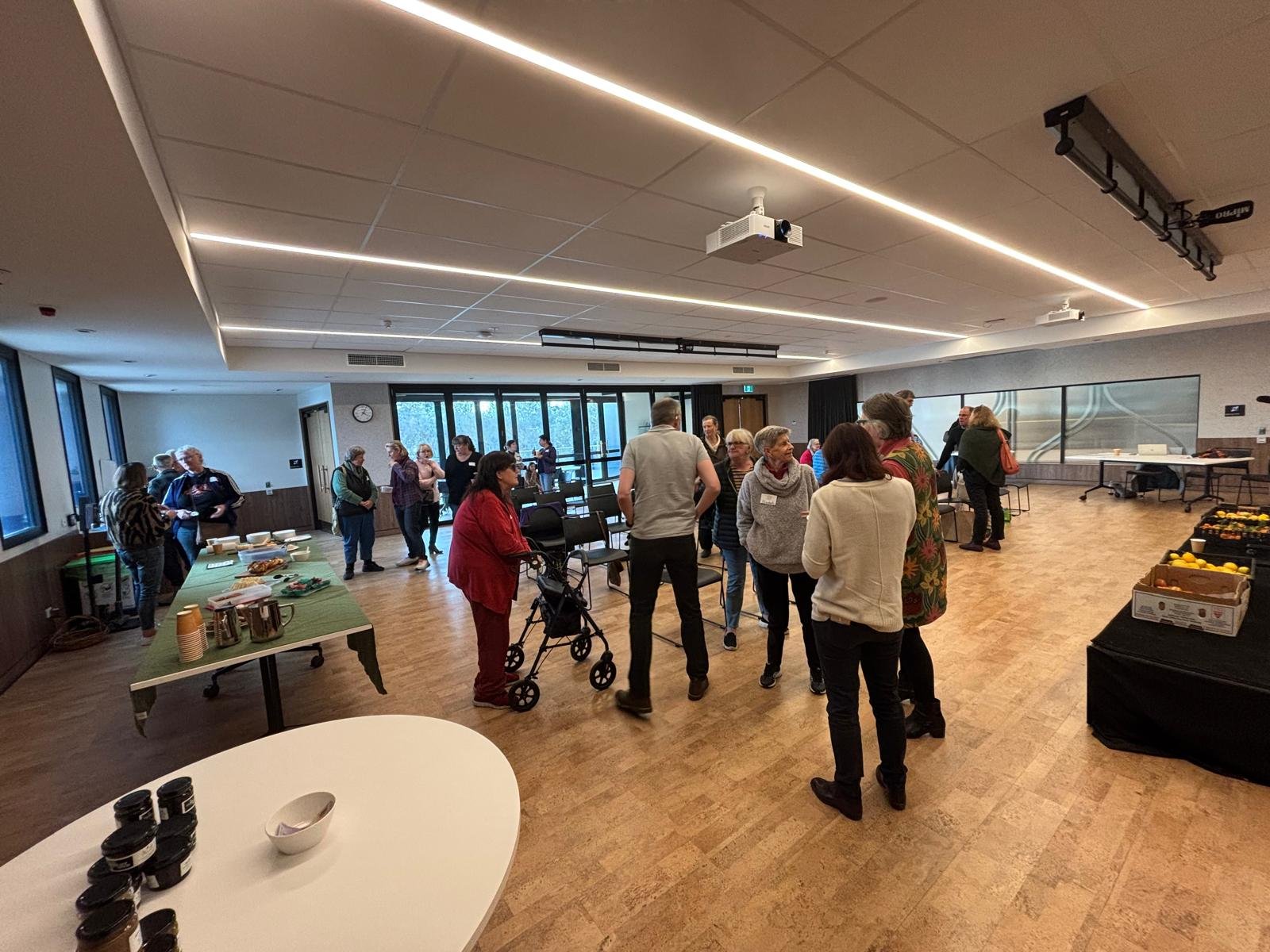
    At our recent Annual General Meeting, we took a moment to reflect, not just on the numbers, but on the people, partnerships, and passion that have made this journey possible.

    Rescuing food, restoring Hope

    From the start, our mission has been clear: getting surplus fruit and vegetables or those facing food insecurity. Whether picked from a backyard lemon tree or rescued from a farm facing crop loss, every piece of produce we collect represents a win for both the community and the environment.

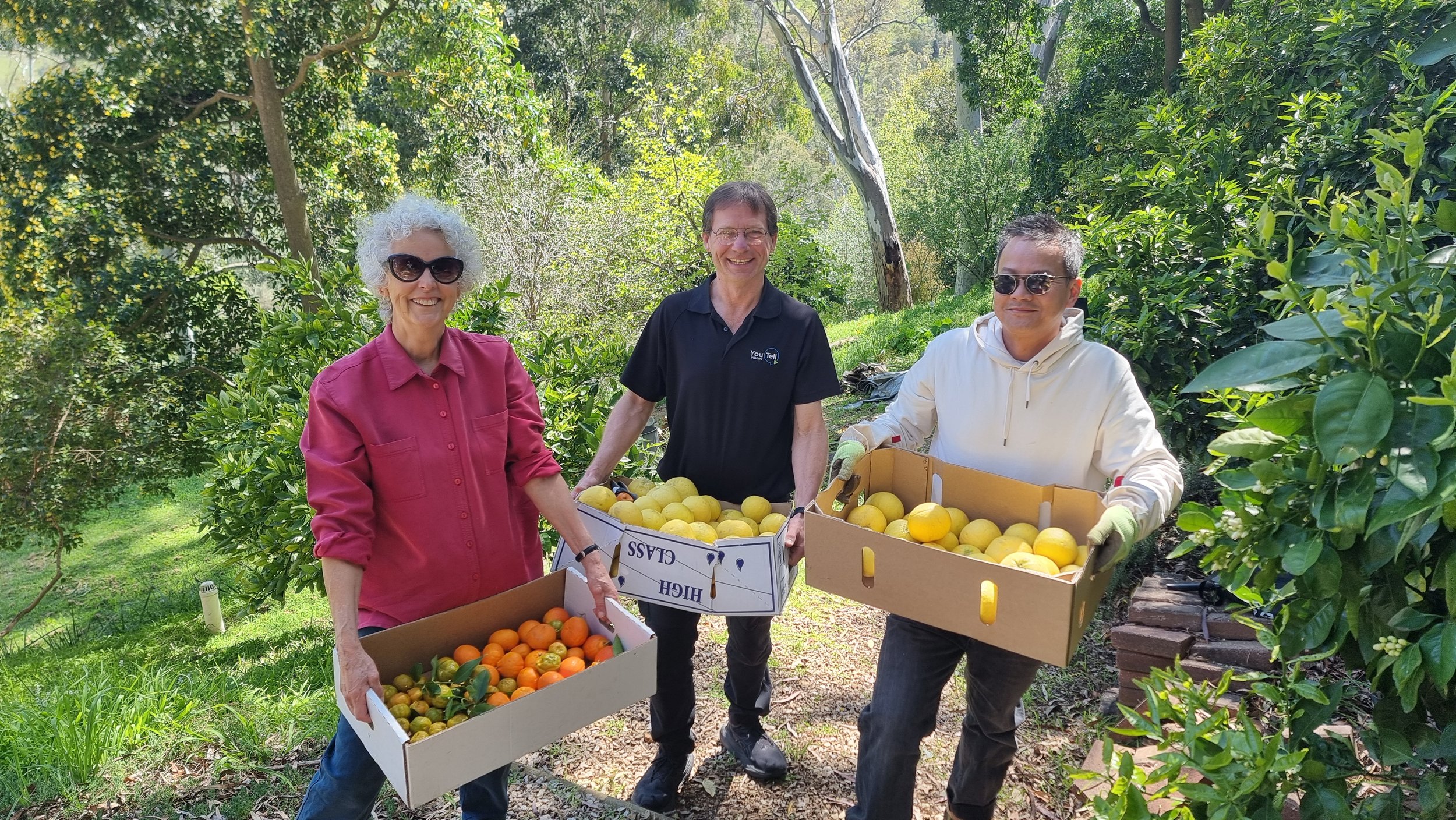
     Citrus harvest in Belair
    Citrus harvest in Belair

    In our first full year of operation (2024), we harvested 11,600 kilograms. By mid-2025, we had already surpassed that figure, collecting a further 12,600 kilograms in just six months. That’s a 109% increase in harvest rate, a clear sign of the momentum building behind our work.

    The variety is just as impressive as the quantity. Over the past 18 months, our baskets have been filled with:

    • 9,650 kilograms of apples and pears

    • 6,850 kilograms of oranges, lemons, mandarins, and grapefruit

    • 6,900 kilograms of vegetables—mostly tomatoes

    • Nearly 900 kilograms of stone fruit, berries, and other specialty produce

    Stories behind the numbers

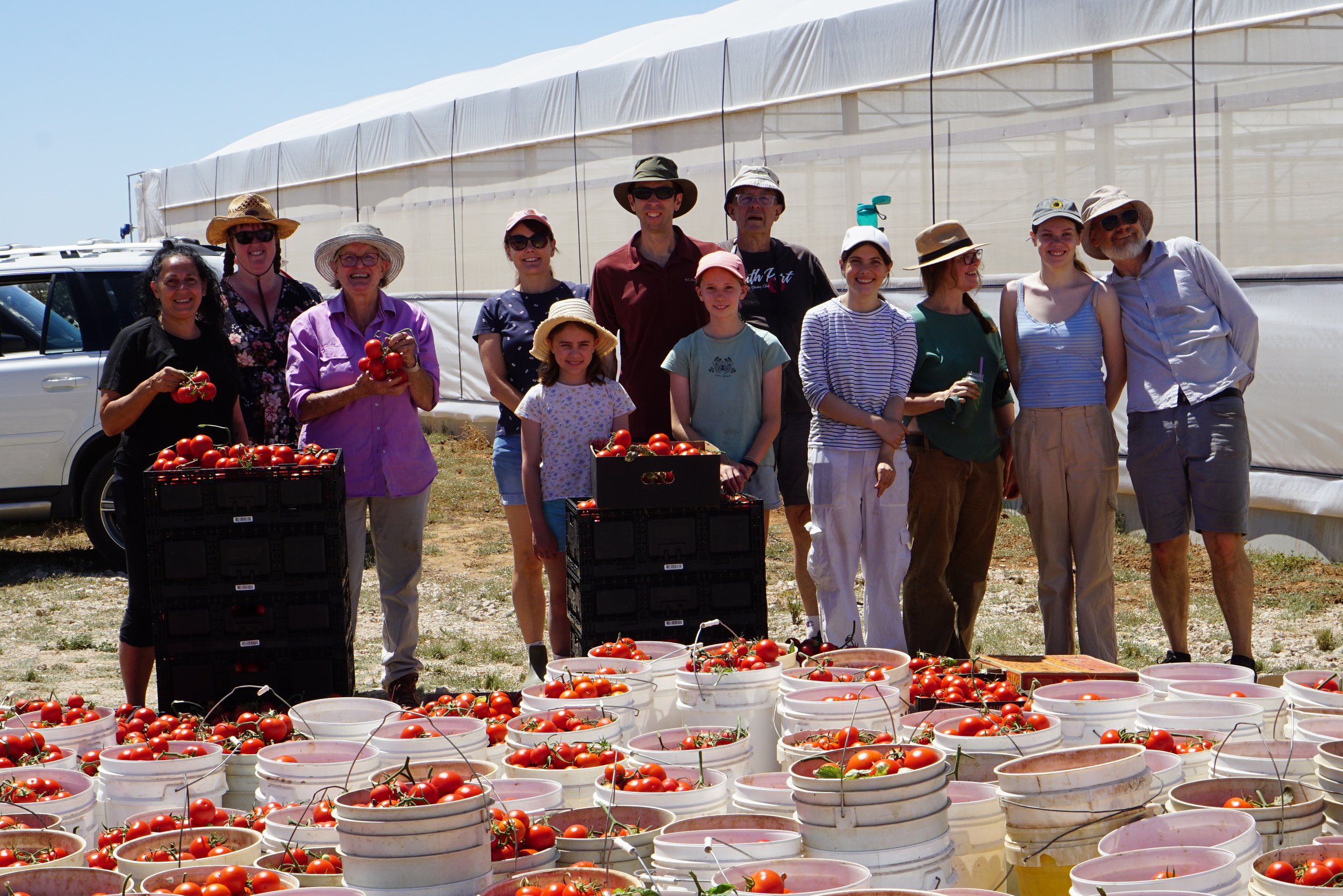
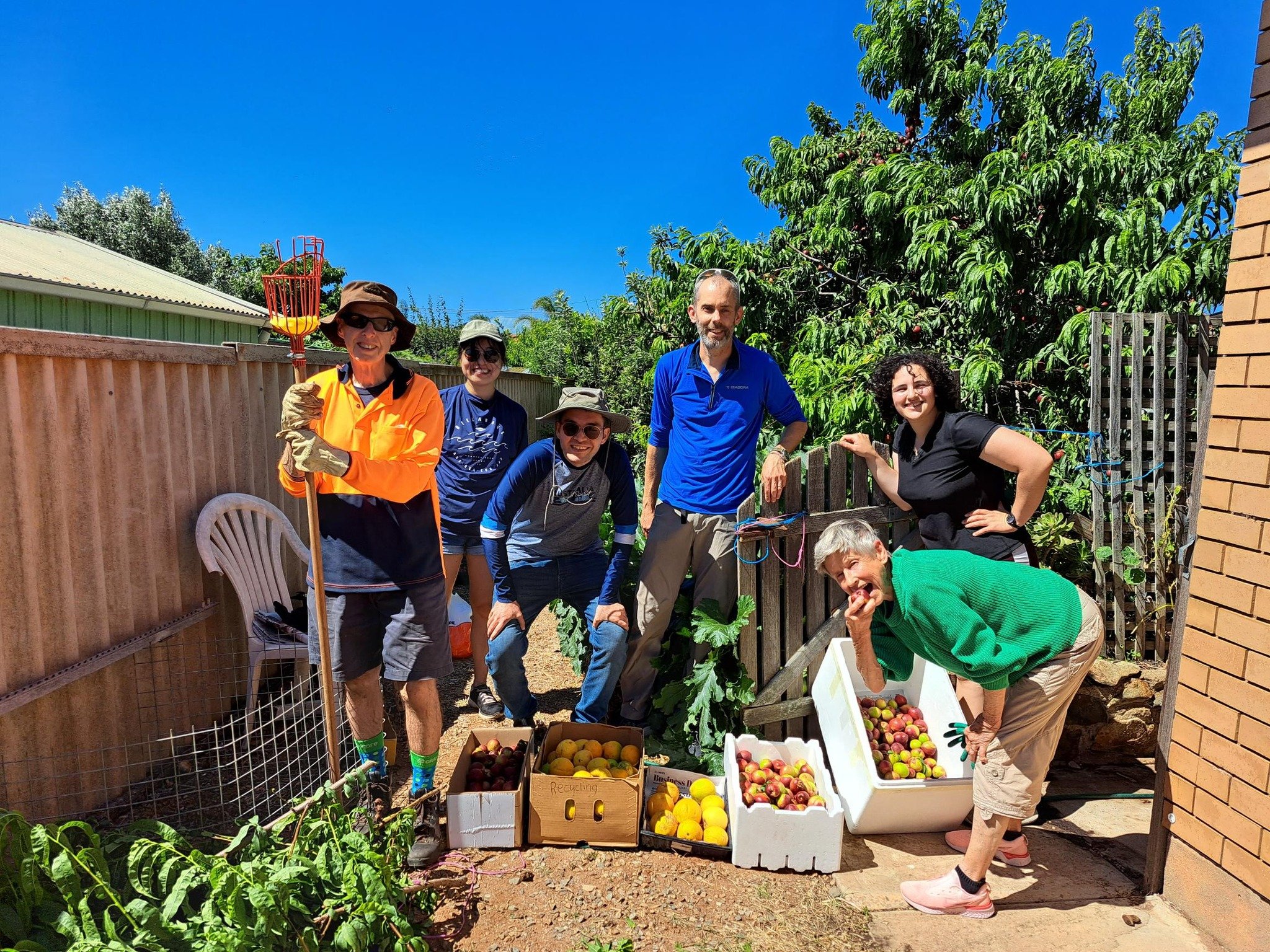
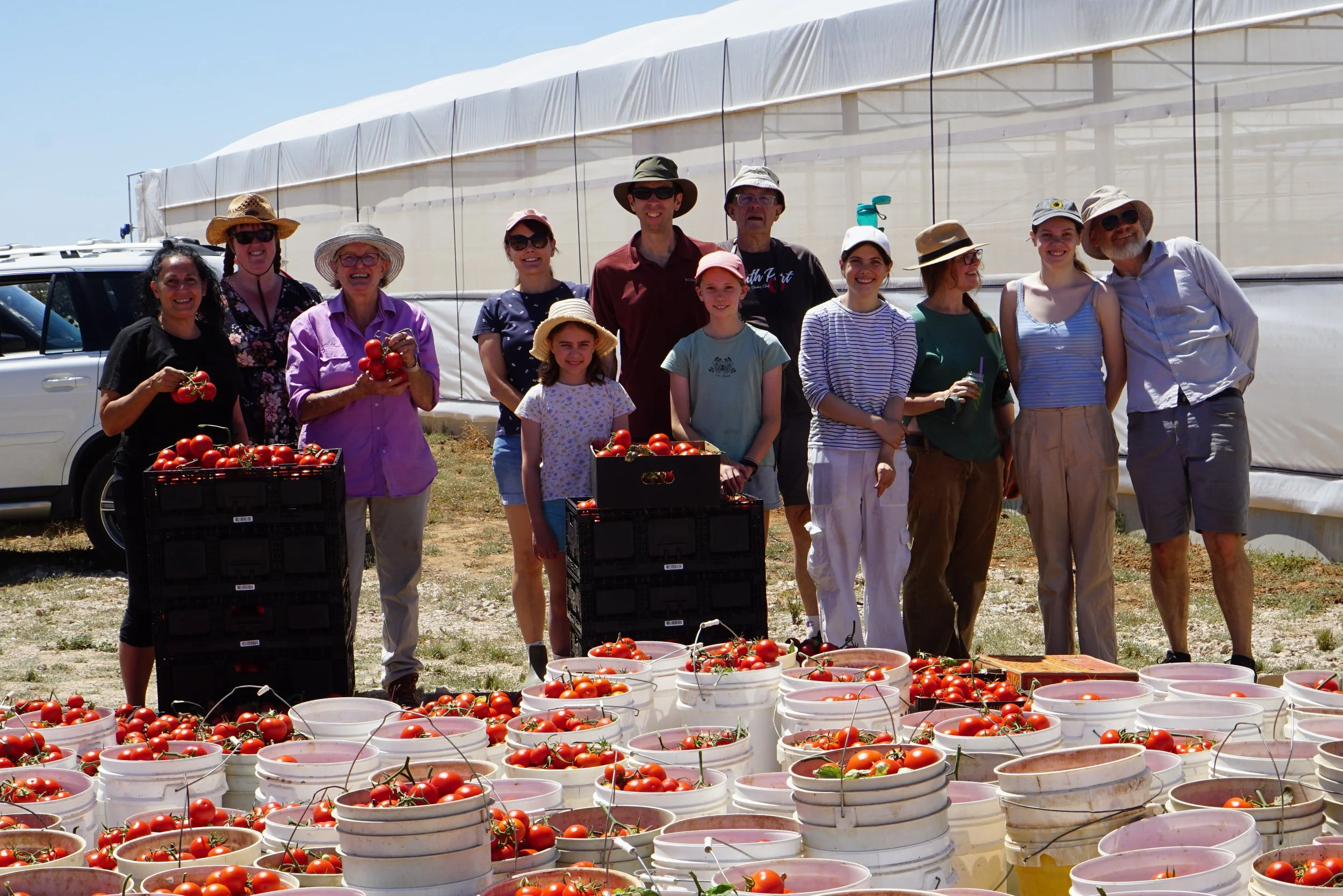
    The numbers tell one story, but the harvests themselves tell another. In the summer of 2024–25, a tomato virus threatened to ruin crops near Two Wells. Working closely with growers, we rescued 6,000 kilograms of tomatoes that might otherwise have gone to waste.

    Just a few months later, in autumn, our volunteers headed to the Adelaide Hills to help with a bumper apple season, bringing in 5,000 kilograms of fruit that ended up in lunchboxes, food hampers, and community kitchens.

     Tomato harvest in Two Wells
    Tomato harvest in Two Wells

    The people and partners powering the change

    Fruit Share Adelaide remains 100% volunteer-operated. More than 100 people have stepped forward to give their time, whether as harvest leaders, drivers, coordinators, or behind-the-scenes support. This flexibility allows anyone with a few spare hours to make a tangible difference.

    We have also been nurturing the next generation of food rescuers through our growing workshop program. From pruning and tree maintenance to fruit preservation techniques, these sessions help people care for their own produce, reduce waste at home, and share surplus with others.

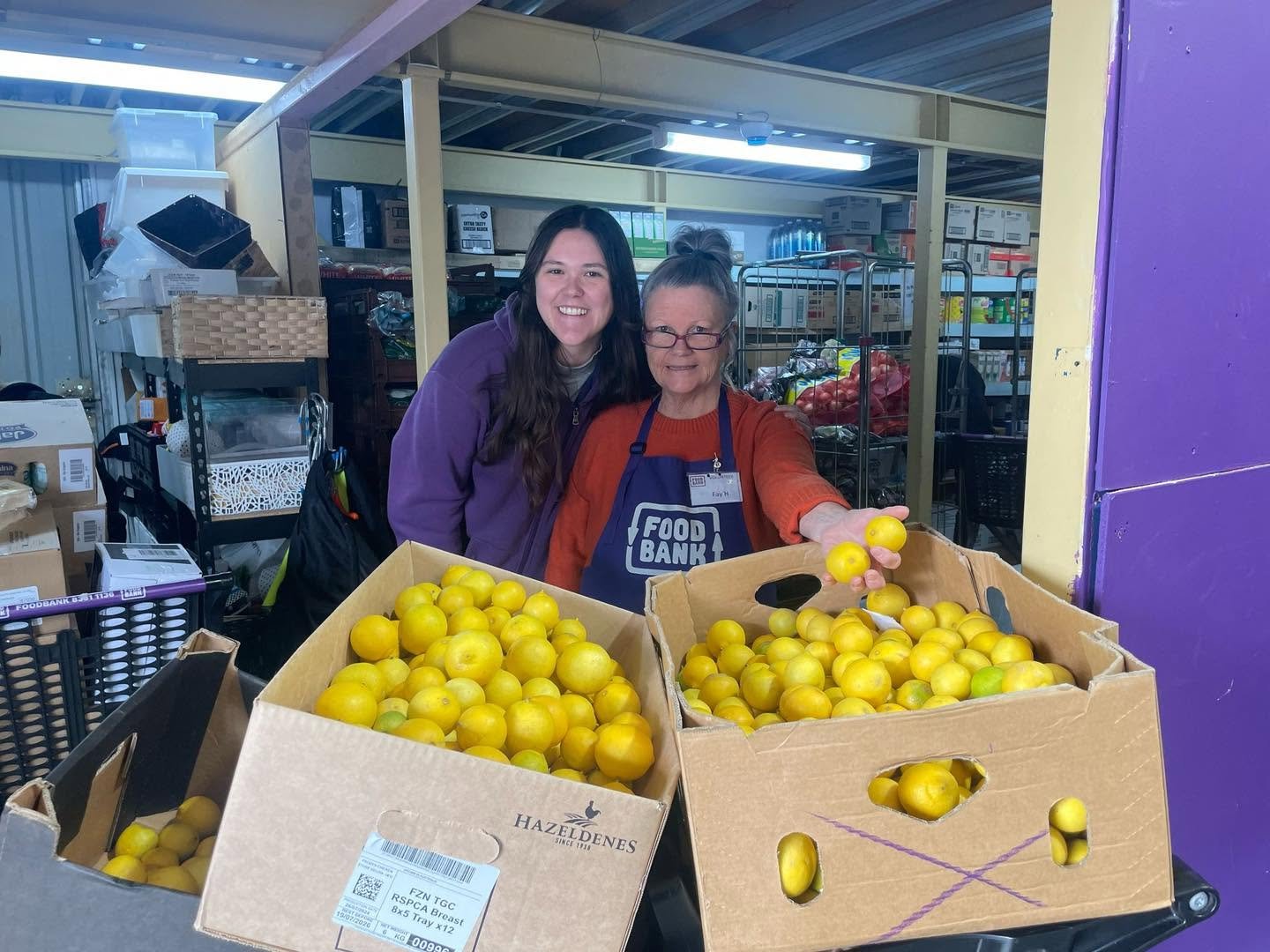
    Our impact doesn’t end with a harvest—it depends on the partners who help us get fresh produce to the people who need it. We are proud to work with Foodbank SA, OzHarvest, Kickstart for Kids, local schools, community food pantries, and grassroots organisations serving people doing it tough.

     Lemon donation to Foodbank
    Lemon donation to Foodbank

    Thanks to these partnerships, every kilogram we collect goes to good use, with zero waste to landfill.

    Building for the future

    As proud as we are of what we achieved so far, we know we’ve only just scratched the surface of what is possible. Our next chapter focuses on building the capacity to scale—streamlining operations, securing dedicated transport, adding professional support staff, and establishing a warehouse hub for storage, sorting, and community engagement.

    With these foundations in place, we believe we can quadruple our harvests within a few years, reaching 100,000 kilograms annually and expanding our reach across Greater Adelaide.

    New leadership, continued mission

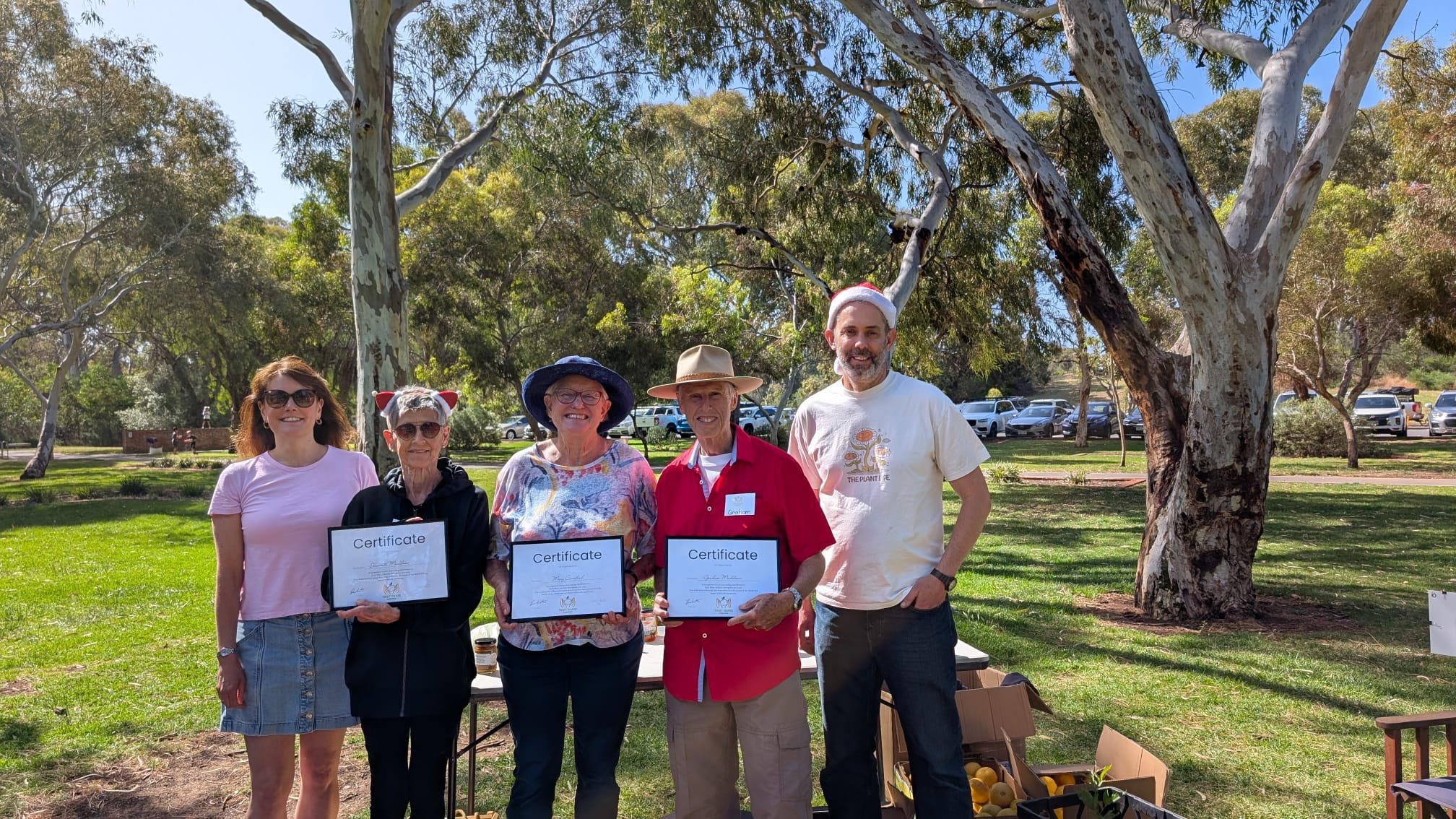
    Our Annual General Meeting marked an important transition in leadership. We extend our heartfelt thanks to Graham and Elisabeth Maddison, who are stepping down from the committee after their invaluable contributions to getting Fruit Share Adelaide off the ground. Their dedication and hard work in these crucial early stages have been instrumental in building the strong foundation we have today.

    We’re excited to welcome our new committee members, who will guide us into our next phase of growth:

    • Brett Dunstone (Chairperson)

    • Mary Crawford (Secretary)

    • Michelle Dunstone (Treasurer)

    • Aviv Shallev (General Member)

    • Izzy Rogers (General Member)

    • Katie Harrigan (General Member)

    • Vanita Schwarz (General Member)

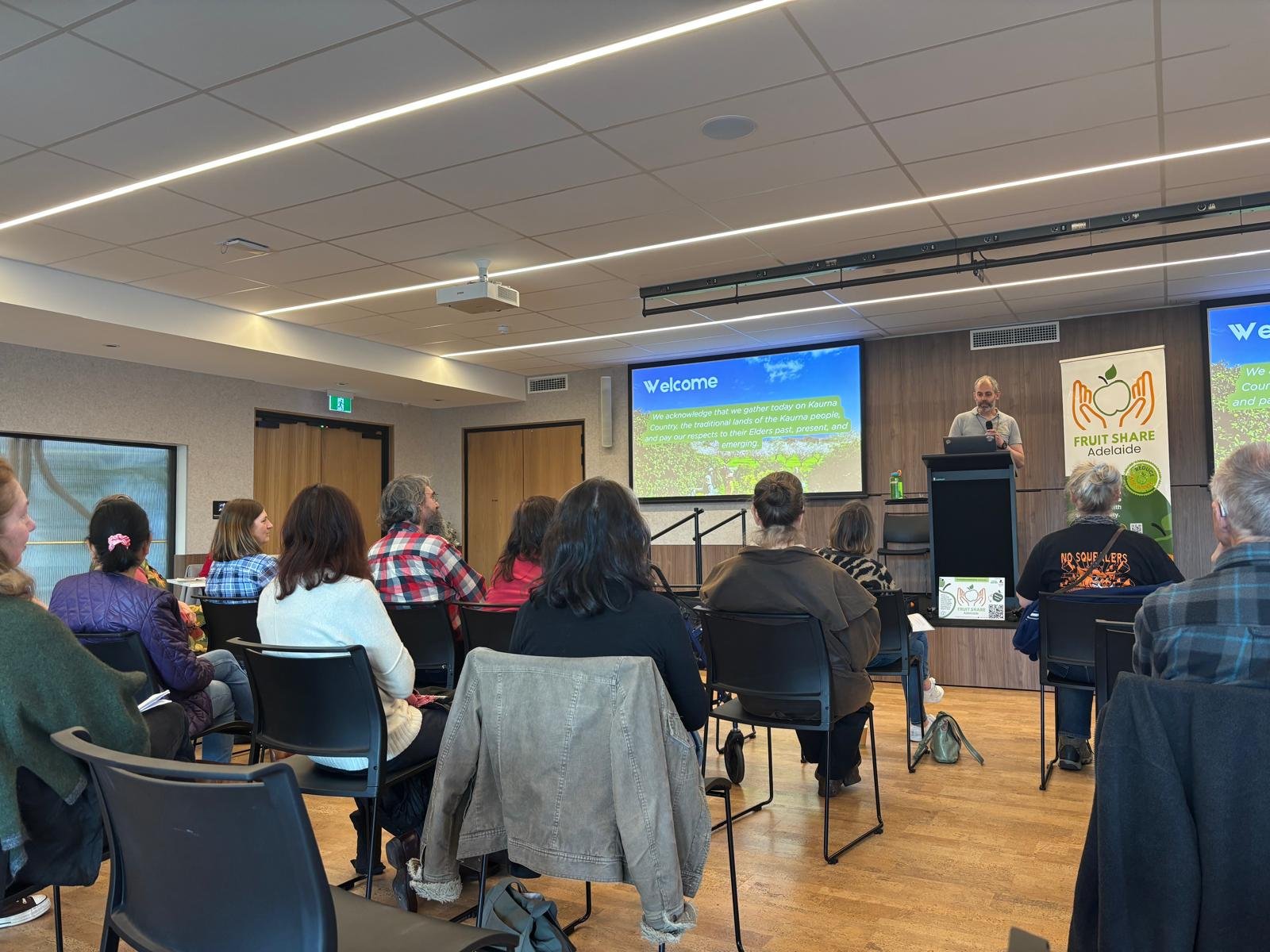
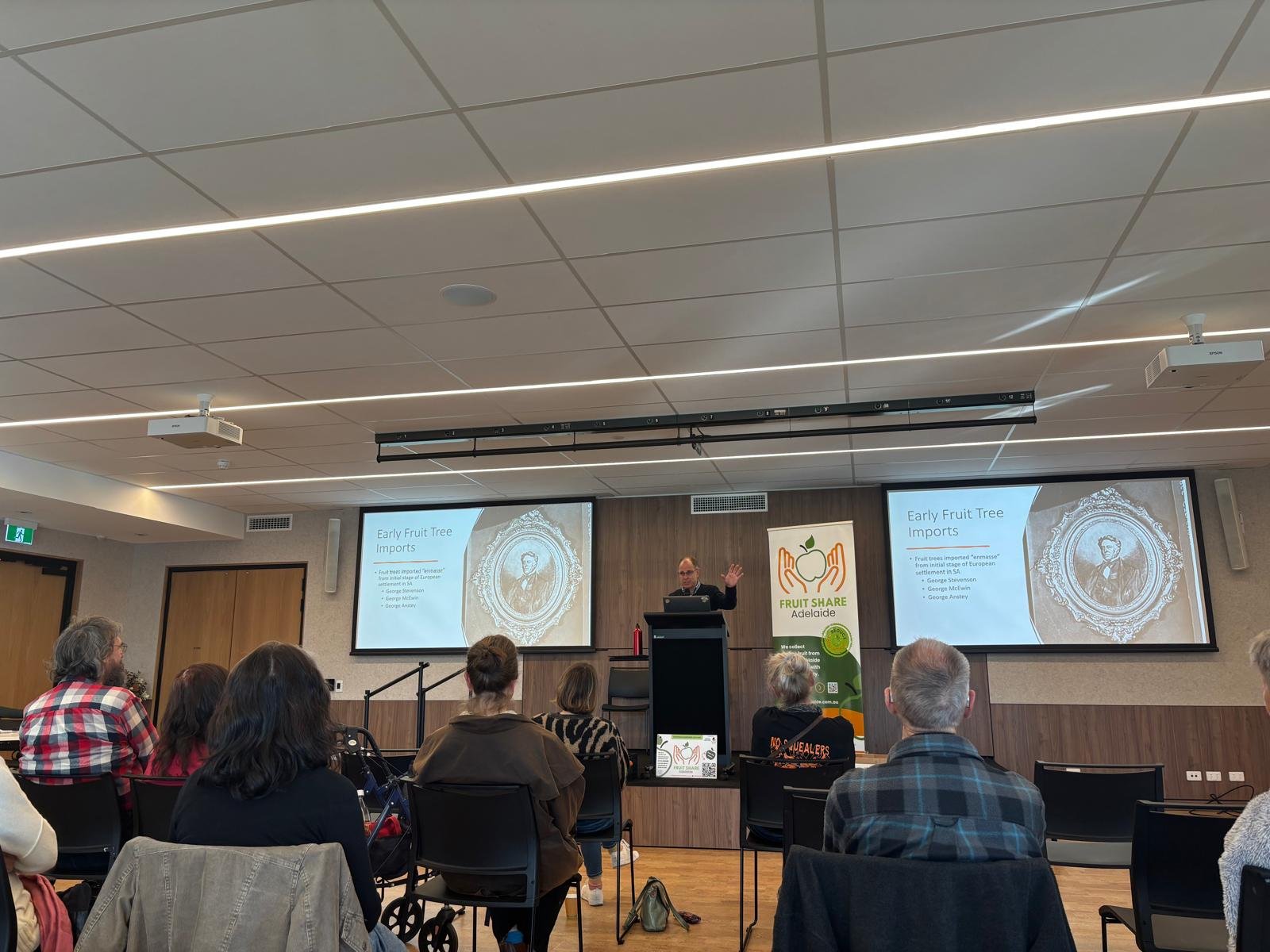
    A special highlight of our AGM was the presentation by Brenton Kortman, President of the Rare Fruit Society of SA, who shared fascinating insights about “Heritage in our backyards: Living History.” His talk beautifully connected our modern food rescue mission with South Australia’s rich agricultural heritage, reminding us that we’re continuing a long tradition of sharing the abundance that grows so well in our Adelaide climate.

    For those interested in learning more about the heritage varieties growing in our backyards and the full scope of our year’s achievements, you can view our complete AGM presentation here.

    An invitation to grow with us

    The first 18 months of Fruit Share Adelaide have shown that a small group of committed people can make a big difference. But the need is growing, and so is our resolve.

    If you have ever wondered how you can help tackle food waste, strengthen local food systems, and support vulnerable communities, this is your invitation. Join us, and be part of turning surplus into sustenance, and harvest into hope.

    Get involved: info@fruitshareadelaide.com.au 

  • Workshops, picks, and plans: A round-up of recent Fruit Share Adelaide activities

    It has been a productive few months at Fruit Share Adelaide (FSA). We’ve been busy with community harvests, running practical workshops, and building stronger partnerships with local councils, all while continuing to rescue fruit and support food relief organisations across the city. 

    Here is a look at what we’ve been working on recently.  

    Pitching our concept and partnering with councils

    In May, we were privileged to participate in the Circular Impact Accelerator, funded by Green Industries SA and delivered by Collab4Good. It was a great opportunity to hear about and learn from other ventures, all dedicated to creating a circular economy in South Australia. We did not win, but we came away even more inspired to continue our mission. Our heartiest congratulations to the winning ventures!

     Our Founder Brett presenting at the Circular Impact Accelerator Pitch Night
    Our Founder Brett presenting at the Circular Impact Accelerator Pitch Night

    We recently collaborated with the City of Charles Sturt to organise a harvest of public fruit trees along McDonnell Avenue and Jervois Avenue in West Hindmarsh. These mostly lemon and orange trees often go unharvested, so we are working to ensure their fruit is put to good use. Our first harvest was at the start of August, with the fruit going to OzHarvest, but there was plenty of fruit for residents to enjoy too. 

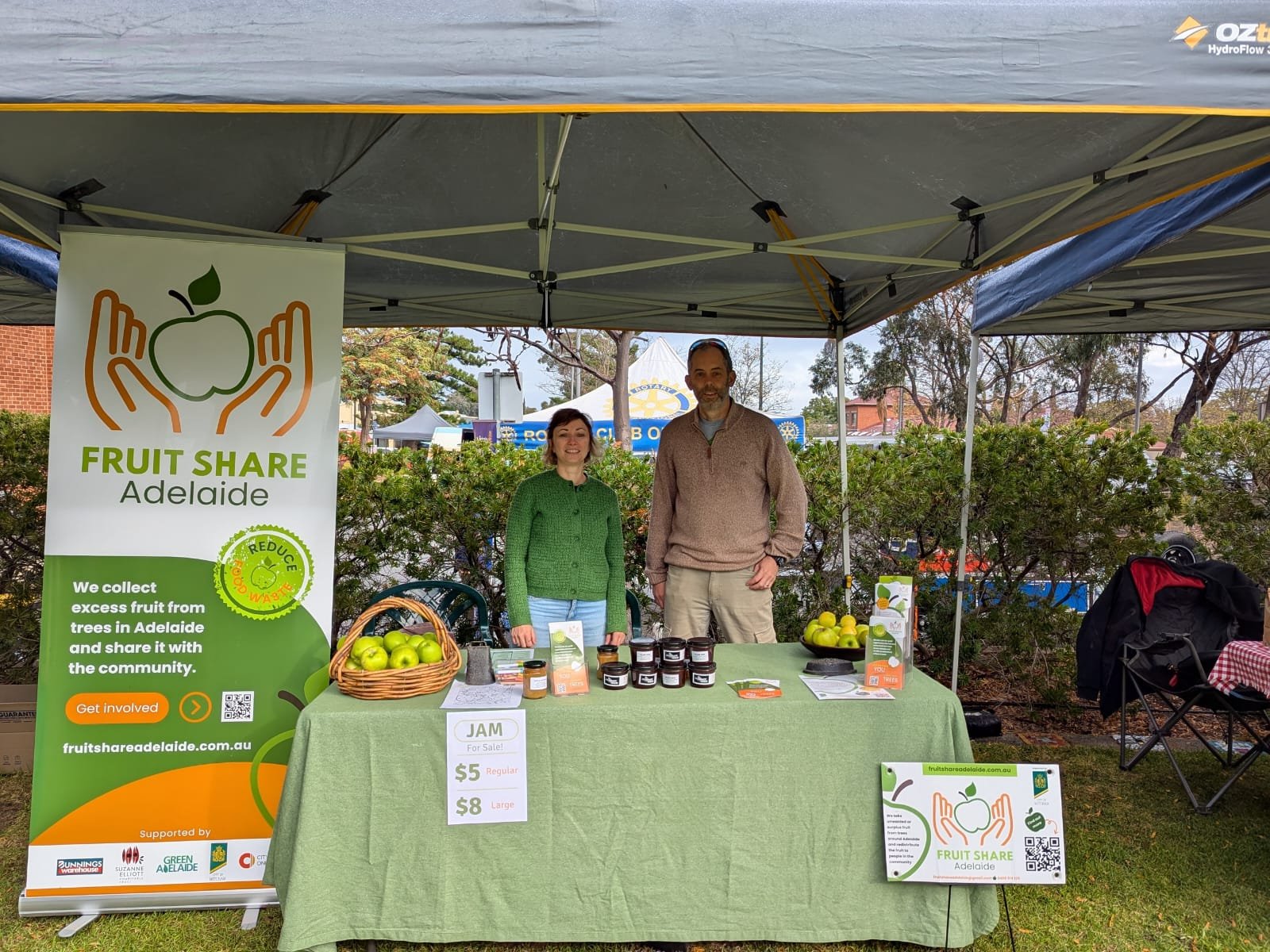
    Our founder, Brett Dunstone, will also be presenting at a Chatty Cafe event hosted by the City of Holdfast Bay, sharing more about FSA’s mission and how community members can get involved. We also ran a stall at the Environment Expo organised by the City of Burnside, and it was a great opportunity to raise awareness about food rescue. 

     Our stall at the Burnside Environment Expo
    Our stall at the Burnside Environment Expo

    We continue to receive valuable support from the City of Onkaparinga and City of Mitcham, who played a key role in helping establish FSA through early grants and engagement opportunities. We are grateful for their continued involvement and look forward to deepening our collaboration with councils across Adelaide.   

    Winter pruning workshops 

    As part of our focus on sustainable urban harvesting, we’ve been running winter pruning workshops to support backyard growers in maintaining healthy, productive fruit trees. These sessions offer practical knowledge around tree care and long-term fruit yield.

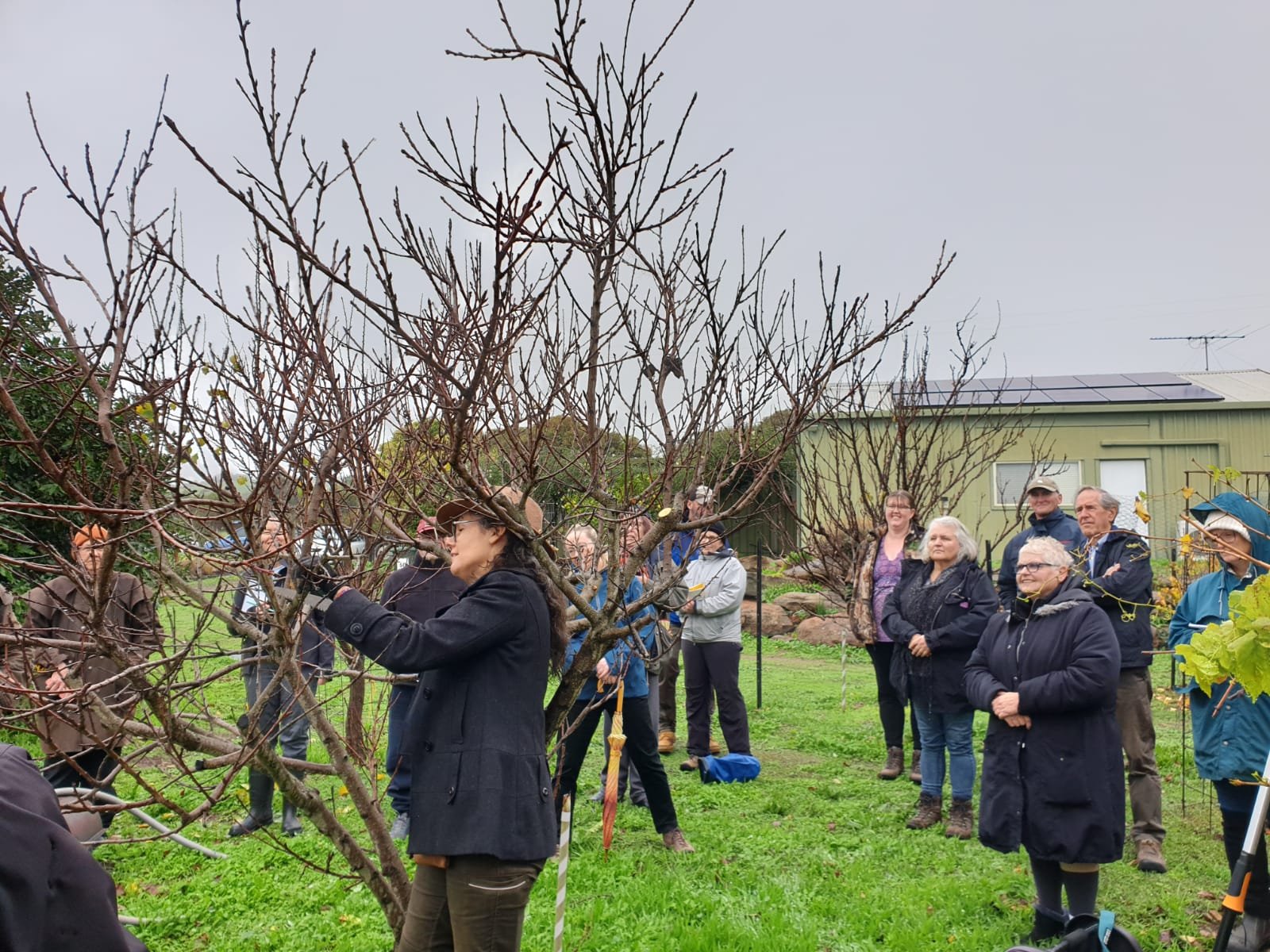
    In June, we held a successful workshop at Sellicks HiIl, led by Amanda Fleming of Willunga Fruit Tree Pruning. Participants gained hands-on experience with pruning tools and techniques, as well as guidance on timing and maintenance. The session wrapped up with a live demonstration and Q&A. We followed this up with two more workshops – at Garden Goodness in Smithfield, led by Peter Heidenreich of Australian Worm Firm; and at Mylor once more led by Amanda. 

     Pruning workshop in Sellicks Hill
    Pruning workshop in Sellicks Hill

    Since the workshops began in 2024, we’ve had over 150 participants, and we are looking to expand this work further as part of our broader education and engagement efforts. 

    Rescue, distribution, and what’s next

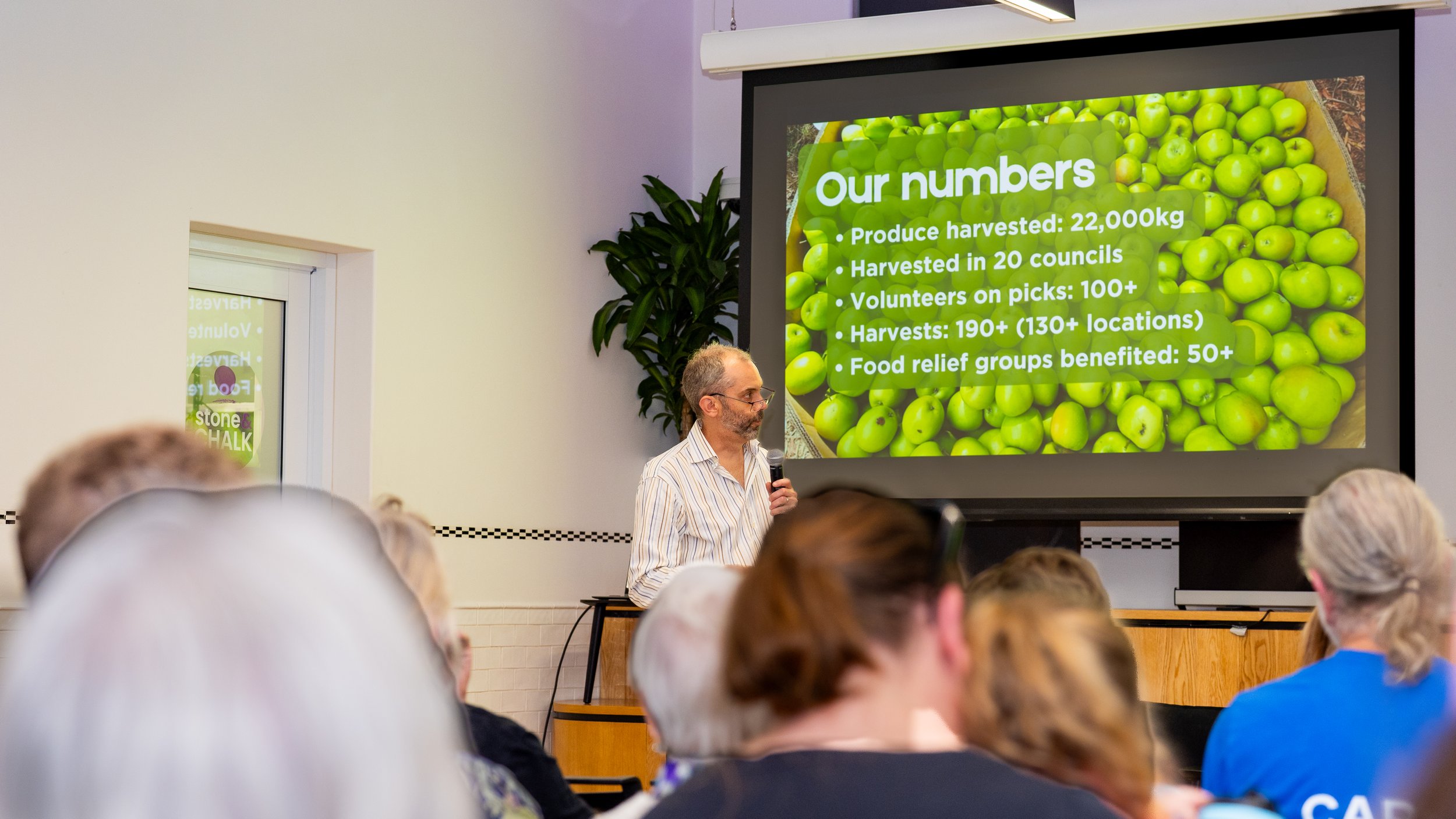
    Since our first harvest in January 2024, FSA has rescued more than 24,000kg of fruit across over 200 harvests. This work has been made possible by the efforts of over 100 volunteers and the generosity of fruit tree owners who have shared their surplus. 

    The fruit we collected has been distributed to more than 50 community organisations, helping improve access to fresh, healthy produce for people doing it tough. 

    Looking ahead, we are focused on scaling up – increasing the number of harvests, strengthening local partnerships, and offering more support to backyard growers. With continued community involvement and council support, we are optimistic about the impact we can achieve together 

    Visit our get involved page to volunteer 

  • How fruit harvesting protects our planet: The environmental win-win

    Earlier this month, on June 5th, we marked World Environment Day—a global reminder of our shared responsibility to protect the Earth. While major campaigns highlight actions we can take worldwide, did you know you can make a difference right in your own backyard? Fruit harvesting is an often-overlooked practice that delivers incredible environmental benefits. At Fruit Share Adelaide, we’re passionate about rescuing surplus backyard fruit and turning it into a win-win for both people and the planet.

    Food waste and its environmental impact

    Each year, Australians throw away an estimated 7.6 million tonnes of food, much of it still perfectly edible. Fruit, in particular, is abundant in backyards across Adelaide—lemons, plums, figs, and so much more. Yet too often, it falls to the ground and rots, contributing to landfill waste and unnecessary greenhouse gas emissions.

    When fruit ends up in landfill, it doesn’t just go to waste; it decomposes without oxygen, releasing methane, a greenhouse gas over 25 times more potent than carbon dioxide. This significantly contributes to climate change and undermines efforts to reduce our collective carbon footprint.

    Wasted fruit also wastes precious resources—water, fertiliser, and energy—that went into growing it. From farm to table, a lot of effort goes into producing food. When we don’t make the most of what’s already available, we miss a vital opportunity to protect the environment and support our communities.

    Harvesting fruit, harvesting hope

    That’s where Fruit Share Adelaide steps in. Since 2024, we’ve been connecting volunteers with backyard growers who have more fruit than they can use. We harvest this overlooked bounty and share it with community organisations, ensuring it goes to people who need it most. By doing so, we’re reducing waste, cutting carbon emissions, and helping Adelaide’s communities thrive.

    Our work helps tackle multiple environmental challenges:

    • Reduced food miles: Locally rescued fruit doesn’t travel thousands of kilometres to reach your table. By eating what’s grown in our own neighbourhoods, we slash transport-related carbon emissions and reduce our reliance on long, energy-intensive supply chains.

    • Minimised landfill waste: Every fruit picked by our volunteers stays out of landfill, preventing the methane emissions that come with rotting organic waste. This small, local action adds up to a significant reduction in greenhouse gas emissions.

    • Healthier soil, stronger ecosystems: Backyard growers can compost leftover peels, cores, and damaged fruit, turning them into nutrient-rich soil amendments that feed their gardens naturally. Composting helps to recycle valuable nutrients, boosts biodiversity in the soil, and reduces the need for synthetic fertilisers.

    Simple steps for backyard growers

    If you have a fruit tree, you’re already part of the solution. Here are some easy ways to make the most of your backyard bounty:

    • Harvest regularly: Picking ripe fruit prevents it from falling and rotting. If you find yourself with more than you can eat, share it with neighbours, friends, or groups like Fruit Share Adelaide.

    • Compost your scraps: Instead of tossing peels and cores in the bin, compost them! Composting not only keeps waste out of landfill but also creates a natural fertiliser that can improve your soil and help your garden thrive.

    • Plant wisely: Choose fruit trees that suit your local climate and soil conditions. Trees that are well-matched to their environment are healthier and require fewer resources to grow.

    • Join a fruit rescue effort: Volunteering with Fruit Share Adelaide or similar initiatives lets you meet like-minded people, learn more about sustainability, and directly reduce food waste.

     Mandarin Harvest in McLaren Vale
    Mandarin Harvest in McLaren Vale

    A community effort for global impact

    At Fruit Share Adelaide, we believe that small, local actions reach far beyond our city. Every basket of rescued fruit represents a step towards a more sustainable food system, one that values the abundance already around us instead of relying solely on supermarket shelves.

    The beauty of fruit rescue is that it’s not just about reducing waste—it’s about reconnecting with the land and each other. Many backyard growers have fruit trees passed down through generations or planted with care years ago. Sharing that harvest not only prevents waste but also strengthens community bonds and supports local food security.

    Since January 2024, Fruit Share Adelaide volunteers have helped rescue over 20,000kg of fruit that would have otherwise gone to waste. That’s thousands of kilograms of carbon emissions avoided, thousands of litres of water saved, and countless delicious, healthy meals for those in need.

    World Environment Day reminds us that every action matters, no matter how small. By rescuing fruit, sharing it with others, and composting what remains, we each become stewards of the environment in our own backyards.

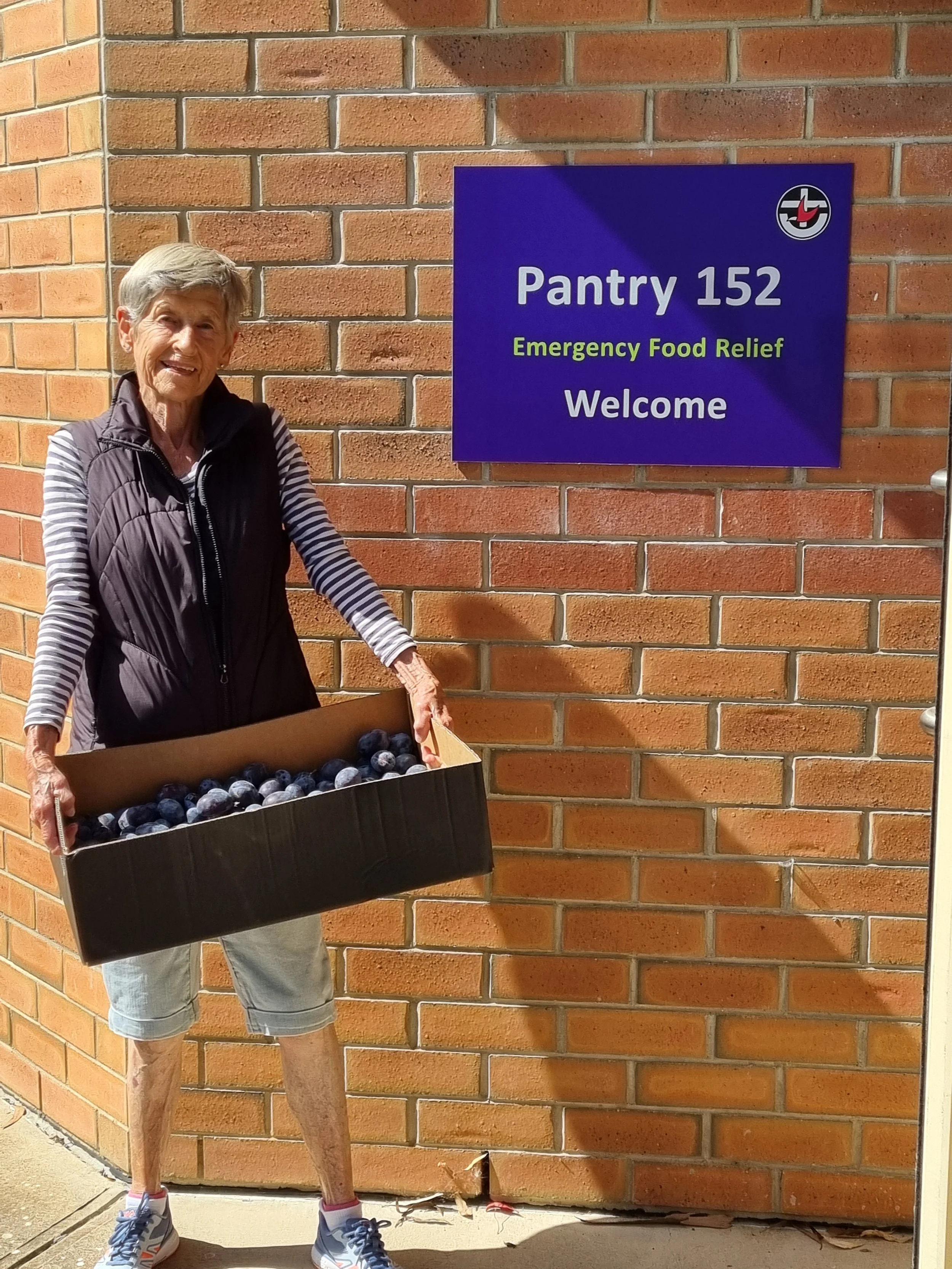
     Giving plums
    Giving plums

    Winning for the environment and the community

    Want to be part of this environmental win-win? Fruit Share Adelaide is always looking for volunteers, backyard growers, and supporters. Whether you have a fruit tree bursting with lemons or just a few hours to spare, there’s a place for you in our community.

    Let’s work together to create a world where nothing is wasted. By turning surplus backyard fruit into a planet-friendly resource, we can protect the Earth and nourish Adelaide at the same time.

    Visit our get involved page to volunteer

  • Our Fruit Heroes: A Tribute to Volunteers across Adelaide

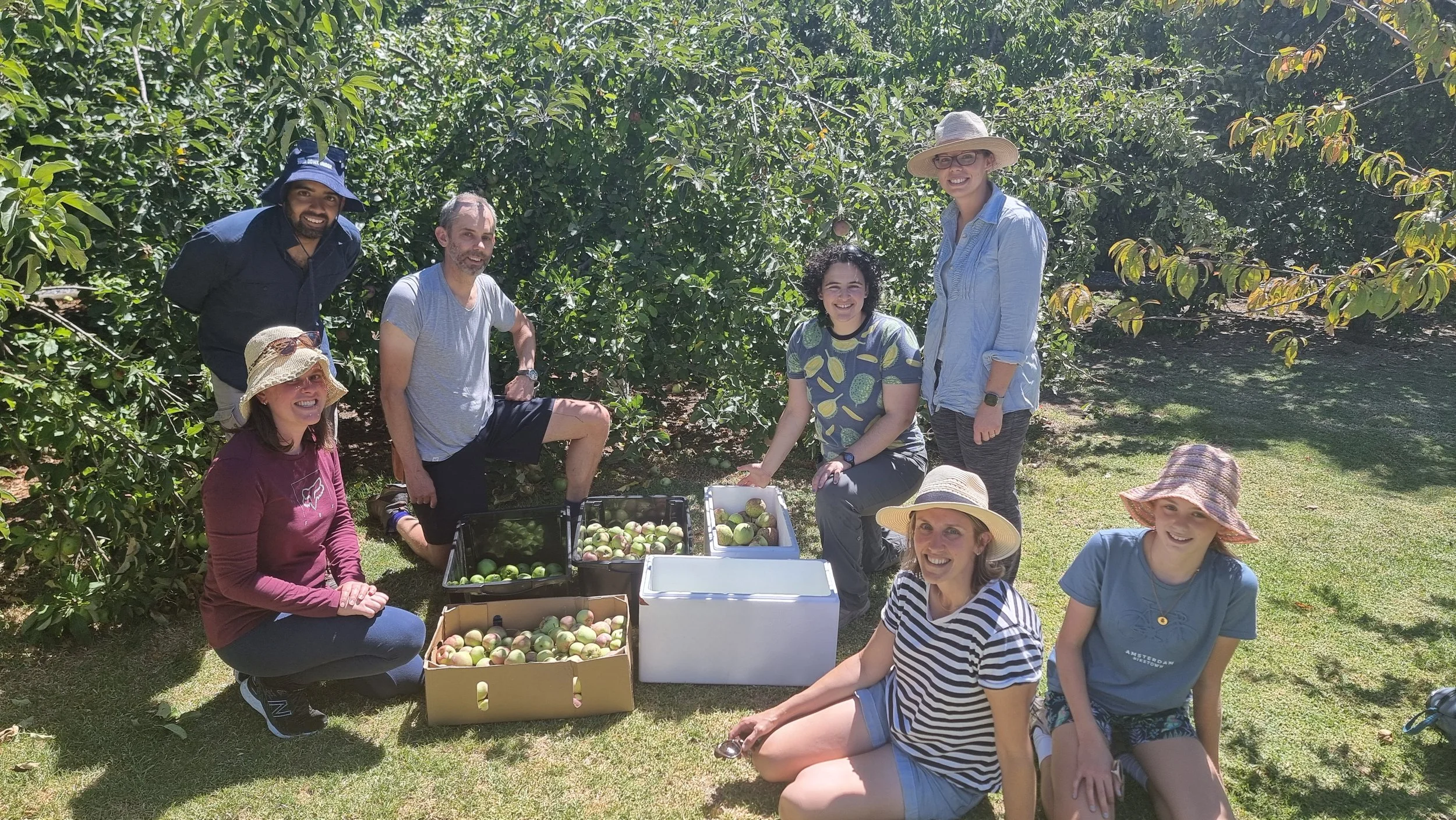
     Charleston Apple & Plum Harvest
    Charleston Apple & Plum Harvest

    Throughout the year, as different fruit trees come into season across Adelaide, a group of dedicated volunteers steps up to do something simple but impactful: they pick fruit that would otherwise go to waste and help share it with people in need.

    These are our Fruit Heroes  ̶  volunteers who give their time and energy to reduce food waste, support local communities, and make the most of the abundance in our suburbs.

    This National Volunteer Week, we celebrate the theme Connecting Communities  ̶  a perfect reflection of what Fruit Share Adelaide is all about. Every time volunteers head out to pick fruit, they are doing more than rescuing produce and supporting local charities. They are meeting new people, building relationships, and strengthening the fabric of our community. As we recognise volunteers across the country, we are proud to shine a light on the local efforts that bring people together, one harvest at a time.

    Why Volunteers Matter

    Fruit Share Adelaide exists because of volunteers. Every pick, delivery, and distribution happens thanks to people who give their time to help others. Their efforts have a direct impact  ̶  from backyard trees to food relief organisations, and everywhere in between.

    Since our first harvest in January 2024, more than 100 dedicated volunteers have picked over 20,000kg of fruit. This fresh produce is delivered to community groups and charities across Adelaide, helping improve food access for those who need it. The fruit comes from backyards, orchards, or public spaces where it might otherwise fall to the ground and go to waste.

    Volunteering also builds connections  ̶  between neighbours, across generations, and among people who might not otherwise meet.

     Sellicks Hill Citrus Harvest
    Sellicks Hill Citrus Harvest

    In their words: Why they pick

    Our volunteers are united by a shared passion for not letting produce go to waste, supporting people in need through food donation, and building a sense of community in the process. 

    “I had an amazing time picking fruit and meeting a generous local who shared their produce with the community,” says Isabella, a volunteer. “It was wonderful to help out, meet new people, and know that our efforts will continue to pay it forward by sharing with others in the Marion community.”

    Amanda and her family have been enthusiastic participants in several recent harvests. “It’s the perfect family activity, there’s a job for each of us at every pick,” she says. “I think we’ve helped pick at least 10 types of fruit, and some amazing vegetables.”

    For Andrew, it’s the perfect way to combine a love of the outdoors with giving back. “I thoroughly enjoyed the experience, it was fun. I loved being out in the garden, the soil and muck  ̶̶  it’s an easy ask for me.” 

    Community connection also motivates volunteers like Eric. “I came here to help other people and to be a volunteer. It’s the best job,” he says. 

    These are just a few voices among many, but they reflect what we hear often: volunteering with Fruit Share Adelaide is easy to get involved in, rewarding, and a practical way to make a difference.

    How It Works  ̶  and Why It Matters

    The process is simple. A property owner lets us know they have a fruit tree that needs picking. Volunteers are matched to the property and collect the fruit. That fruit is then distributed to food relief agencies, community kitchens, and other organisations.

    The outcomes are significant:

    • Fresh, healthy food reaches people who need it.

    • Less fruit goes to landfill, helping reduce waste and emissions.

    • Backyard trees are cared for, and property owners are supported.

    • Volunteers gain skills, make connections, and contribute to their local community.

    In short, everyone benefits. It’s a small act with a big impact.

    Looking Ahead: Winter Is Our Busiest Season

    As winter approaches, we are preparing for our busiest time of year. Citrus season brings lots of harvests, and we will need plenty of support to keep up with demand.

    If you have ever thought about volunteering, now is a great time to start. All you need is a willingness to help, no experience required. Most fruit picks take an hour or two, and you can choose times and locations that suit you.

    We also welcome help with transporting fruit, coordinating picks, or spreading the word. Whether you can help once a week or once a month, there is a place for you. With over 100 registered volunteers, you will be joining a growing community working toward a more sustainable Adelaide.

    Thank You to Our Volunteers

    Fruit Share Adelaide would not exist without its volunteers. Whether you’ve joined one pick or dozens, coordinated a harvest, delivered fruit, or helped spread the word, you’ve made a difference and helped drive our mission forward.

    As we head into another winter harvest, we are excited to welcome new volunteers and reconnect with familiar faces. Thank you for being part of our Fruit Share Adelaide community.

     Two Wells Tomato Harvest
    Two Wells Tomato Harvest

    Ready to get involved? Visit our get involved page to volunteer

  • Getting Your Fruit Trees Ready for Winter: A Complete Guide

    Why do some fruit trees thrive year after year while others struggle to produce a decent crop? The secret often lies in how we care for them during the cooler months. As winter approaches in Adelaide, it’s time to prepare our fruit trees for the challenging season ahead.

    Essential Pre-Winter Maintenance

    Think of autumn cleanup as your trees’ end-of-season health check. What’s lurking in those fallen leaves and forgotten fruit? Often, it’s a mix of potential problems and valuable nutrients.

    While fungal spores, insect eggs, and disease-causing bacteria can hide in garden debris, healthy leaf litter also builds soil structure and returns nutrients to your trees. The key is selective cleaning – remove visibly diseased or pest-infested materials while allowing healthy leaf litter to decompose naturally or incorporating it into your mulch. This balanced approach gives your trees both protection from disease and the benefits of natural soil building.

    Many Adelaide gardeners have various fruits at different stages this time of year. Regular harvesting prevents pest problems and reduces disease pressure on your trees.

    Common seasonal fruits in our region include:

    • Apples: Late varieties like Granny Smith and Pink Lady

    • Pears: Winter Nelis and Beurré Bosc

    • Quinces: Usually ready by late autumn

    • Citrus: Many varieties are just beginning their main season, with early fruits starting to ripen

    Remember that old gardener’s saying: “One rotting apple spoils the barrel”? The same principle applies to fruit left on or under your trees!

    Protecting Against Diseases and Pests

    Disease prevention starts with understanding what you’re up against. While fungal diseases seriously threaten fruit trees, effective control begins with good garden hygiene and natural preventative measures. Regular removal of fallen leaves, fruit, and debris eliminates disease harbourage, while improving air circulation through proper pruning creates an environment where fungal spores struggle to establish. Many Adelaide gardeners succeed with organic solutions like neem oil, milk sprays (1:10 ratio with water), and seaweed extracts that strengthen plants’ natural defences without introducing harsh chemicals to your garden ecosystem.

    But physical protection is just as important as chemical treatments. Tree guards serve as vital armour against environmental and pest damage. They’re particularly crucial for young trees that haven’t developed tough bark yet, and they can prevent devastating damage from rabbits, possums, and even lawn equipment.

    Choose from these effective options:

    • Rigid plastic guards: Perfect for young trees

    • Wire mesh cylinders: Ideal for protecting against rabbits and larger pests

    • Spiral guards: These grow with your tree and provide good airflow

    • But don’t forget to remove tree guards before the tree gets too big

    • Check solid tree guards are not harbouring snails, earwigs and slaters over winter

    Bird management requires a comprehensive approach that goes beyond simple netting. Birds can strip a fruit tree bare in days, but they also play a vital role in pest control. The key is finding the right balance. Start by understanding which birds are causing problems and when they’re most active. Then, implement a mix of deterrents you can rotate throughout the season.

    Effective bird management strategies include:

    • Bird netting (ensure it’s adequately tensioned to prevent entanglement)

    • Visual deterrents like reflective tape or old CDs

    • Decoy predators (though remember to move these regularly)

    • Sonic deterrents for more extensive gardens

    Proper Autumn Watering

    Don’t be fooled by cooler temperatures. Autumn in Adelaide often brings dry conditions that can stress your fruit trees just when they need to be building strength for winter. Proper watering now is crucial for tree health, successful dormancy, and strong flowering when spring arrives.

    Remember, many Adelaide gardens have clay-rich soils that can become water-repellent (non-wetting) when allowed to dry out completely. Once this happens, water runs off rather than soaking in where roots need it. Signs your soil might struggle include:

    • Water pooling on the surface then running off

    • Dry soil just centimetres below a damp surface

    • Trees showing wilting or leaf curl despite recent rain

    The solution? Deep, slow watering that reaches well below the surface. Use these techniques for best results:

    • Create a shallow basin around each tree extending to the drip line

    • Apply water slowly over several hours using drip irrigation or a hose set to a trickle

    • Add organic matter to improve soil structure and water retention

    • Consider using a wetting agent for particularly stubborn soils

    A good rule of thumb: water deeply regularly during autumn rather than frequent shallow watering. This encourages roots to grow down rather than staying near the surface, creating stronger trees that can better withstand next summer’s heat.

    When clay soils dry out they crack, go hard and plants have difficulty growing. To improve clay soils, add gypsum (1 kg per square metre). Gypsum will help break up the clay making it easier to dig in good organic materials. These steps may need to be repeated to reduce the soil becoming dry and hard.

    Smart Soil Care and Mulching

    Have you ever noticed how nature protects the soil in a forest? That’s what we’re aiming to replicate with proper mulching.

    A good mulch layer acts like a protective blanket for your soil, regulating temperature, retaining moisture, and gradually breaking down to feed your trees. The key is getting the correct depth and placement – remember, think doughnut, not volcano!

    Proper mulching technique makes all the difference. Keep the mulch about 10cm thick and pulled back from the trunk to prevent collar rot. When you do, it creates an ideal environment for beneficial soil organisms while suppressing weeds and maintaining consistent soil moisture.

    Select quality materials that will break down slowly and contribute to soil health:

    • Aged wood chips

    • Straw (avoid hay as it often contains seeds)

    • Autumn leaves (maple and oak are excellent)

    • Composted bark

    Winter Protection Strategies

    Winter can be a tricky time for fruit trees in Adelaide. While we rarely face severe frosts, those sudden cold snaps can still do some damage, especially to young trees or early-flowering varieties. So, how do you give your trees a fighting chance against the chill?

    Frost protection is key during those clear, still nights when temperatures take a nosedive. While commercial growers might use fancy frost protection systems like overhead sprinklers or wind machines, home gardeners can achieve great results with simple tricks.

    Basic frost protection techniques include:

    • Wrapping trunks and main branches with hessian

    • Installing temporary covers on frost-prone nights

    • Using frost protection sprays

    • Placing water-filled containers near trees

    But why do these methods work?

    Wrapping trunks with hessian or using temporary covers provides insulation, traps heat, and protects sensitive bark from freezing.

    Frost protection sprays create a barrier that prevents ice from forming on the plant tissue. And water-filled containers release heat as they freeze, which can help to keep the surrounding air temperature slightly warmer.

    Don’t underestimate the power of location, either. Plant frost-sensitive trees in sheltered spots, such as near a wall or fence, which can provide some protection from the elements.

    By taking these simple steps, you can help your fruit trees weather the winter and emerge stronger in the spring.

    Pruning During Winter

    Winter isn’t just a time for rest; it’s also an ideal opportunity to get your pruning shears out.

    Think of winter pruning as giving your trees a haircut and setting them up for a fantastic fruiting season!

    Start by removing the three D’s: dead, diseased, and damaged wood. This tidies up your tree and prevents potential problems from spreading.

    Once that’s done, you’ll have a clearer view of the tree’s structure and can start shaping it for optimal growth.

    Key pruning principles:

    • Recognise the difference between fruiting buds and leaf buds. Pruning too hard or taking out fruiting branches will reduce your harvest.

    • Make clean cuts at 45-degree angles

    • Remove crossing branches

    • Maintain balanced branch spacing

    • Keep tools sharp and clean

    The goal is to create an open centre, so sunlight reaches all parts of the tree. Imagine a wine glass shape – this encourages good air circulation and ensures that fruit develops evenly. Remember, pruning isn’t just about aesthetics; it’s about promoting healthy growth and maximising your harvest.

    By following these pruning tips, you’ll encourage vigorous new growth, improve fruit quality, and keep your trees in great shape for years to come.

    Feeding for Future Growth

    Have you ever wondered how to give your fruit trees that extra oomph for the coming spring? Winter feeding is the answer! Think of it as stocking up your tree’s pantry before the growing season. While things might look quiet above ground, the roots are still busy absorbing nutrients.

    So, what should you feed your trees during autumn? the winter? Here’s a simple recipe to get you started:

    • Aged manure or compost: Spread it around the drip line to enrich the soil

    • Rock minerals: These add essential trace elements

    • Blood and bone: Great for nitrogen and phosphorus

    • Potash: Helps with fruit development

    • Liquid fertalisers are readily available to plants in autum.

    Timing is everything! Apply your autumn feed while the soil is still warm enough for roots to actively take up nutrients. Try to feed your trees just before a light rain and when you are deep watering. That way, nutrients soak into the soil instead of washing away.

    Also, remember that different trees have different needs. Citrus trees, for example, love nitrogen, while stone fruit trees benefit from extra potassium.

    Not sure what your trees need? A soil test can give you some clues!

    Planning Ahead

    Winter isn’t just about hibernation for your trees; it’s also the perfect time for you to strategise! Think of it as planning your next garden adventure while your trees nap.

    Start by asking yourself a few questions:

    • Are my trees healthy and productive?

    • Are they making good use of their space?

    • Could I add any companion plants to help them out?

    Creating a maintenance calendar now can save you a lot of headaches later. Jot down when to prune, feed, and watch out for pests. Many gardeners are even using apps these days to keep track of everything. It’s like having a virtual gardening assistant!

    Winter is also a fantastic time to dream about fresh additions to your garden.

    You may have been eyeing a particular variety or want to try something new. Nurseries often have bare-root stock in winter, which can be a budget-friendly way to expand your collection. Just remember to jot down your plans so you know where everything will go!

    From Autumn Care to Spring Success: A Final Word

    Autumn may look like a slow season for the garden, but it’s a crucial time to prepare for a bountiful harvest. The work you do now – like pre-winter maintenance, frost protection, pruning, watering and feeding – is vital in ensuring your trees thrive.

    Consider it this way: the time and effort you invest during autumn can lead to healthier and more productive trees in the seasons ahead.

    Growing Community Through Fruit Share Adelaide
  • Making a Difference: Lefevre Community Kitchen Transforms Local Produce into Community Connection

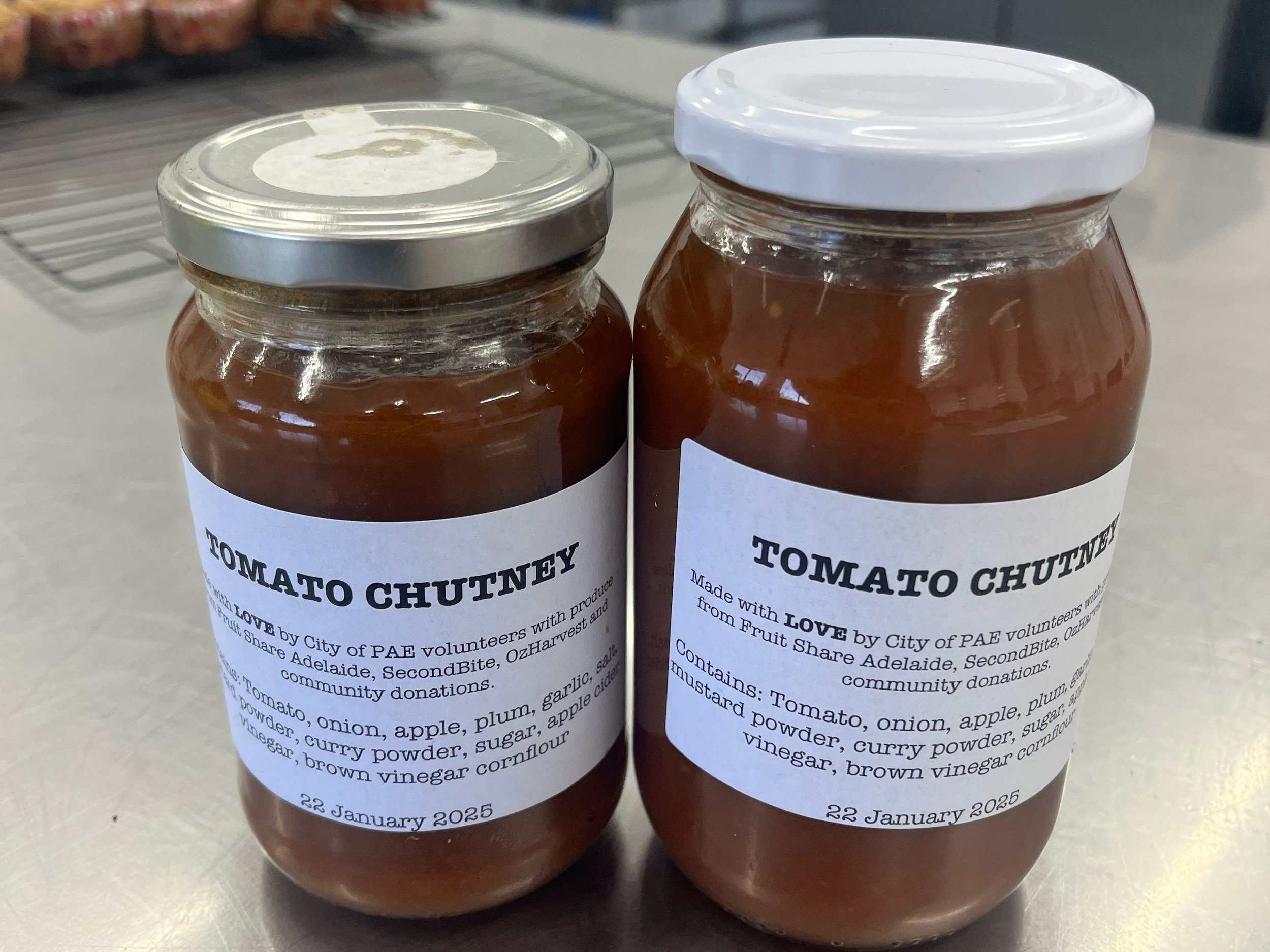
     Tomato Chutney (made by Lefevre Community Kitchen)
    Tomato Chutney (made by Lefevre Community Kitchen)

    Located at the Lefevre Wellbeing Precinct in Osborne, the Lefevre Community Kitchen is a shining example of how local volunteers can turn surplus food into real community benefit.  Established in August 2020 by the City of Port Adelaide Enfield in response to food insecurity during the COVID-19 pandemic, the kitchen has since grown into a welcoming space that fosters food security, nutrition education, and social connection.

    Each week, the dedicated Food Crew Volunteers work in partnership with food rescue organisations such as Fruit Share Adelaide, OzHarvest, and SecondBite to deliver a hot meal. Their Thursday lunch program is about more than just a meal – it’s a chance for people to connect, share stories, and build community.

    The kitchen also hosts the Open Kitchen program, which offers hands-on cooking classes and workshops that teach valuable skills like food preservation and reducing food waste. This program is run in collaboration with KESAB and local facilitators.

    The Food Crew also looks after a Grow Free Cart, available five days a week, where community members are encouraged to “take what you need, leave what you can.” It’s a simple yet powerful way to share fresh produce and promote giving within the community.

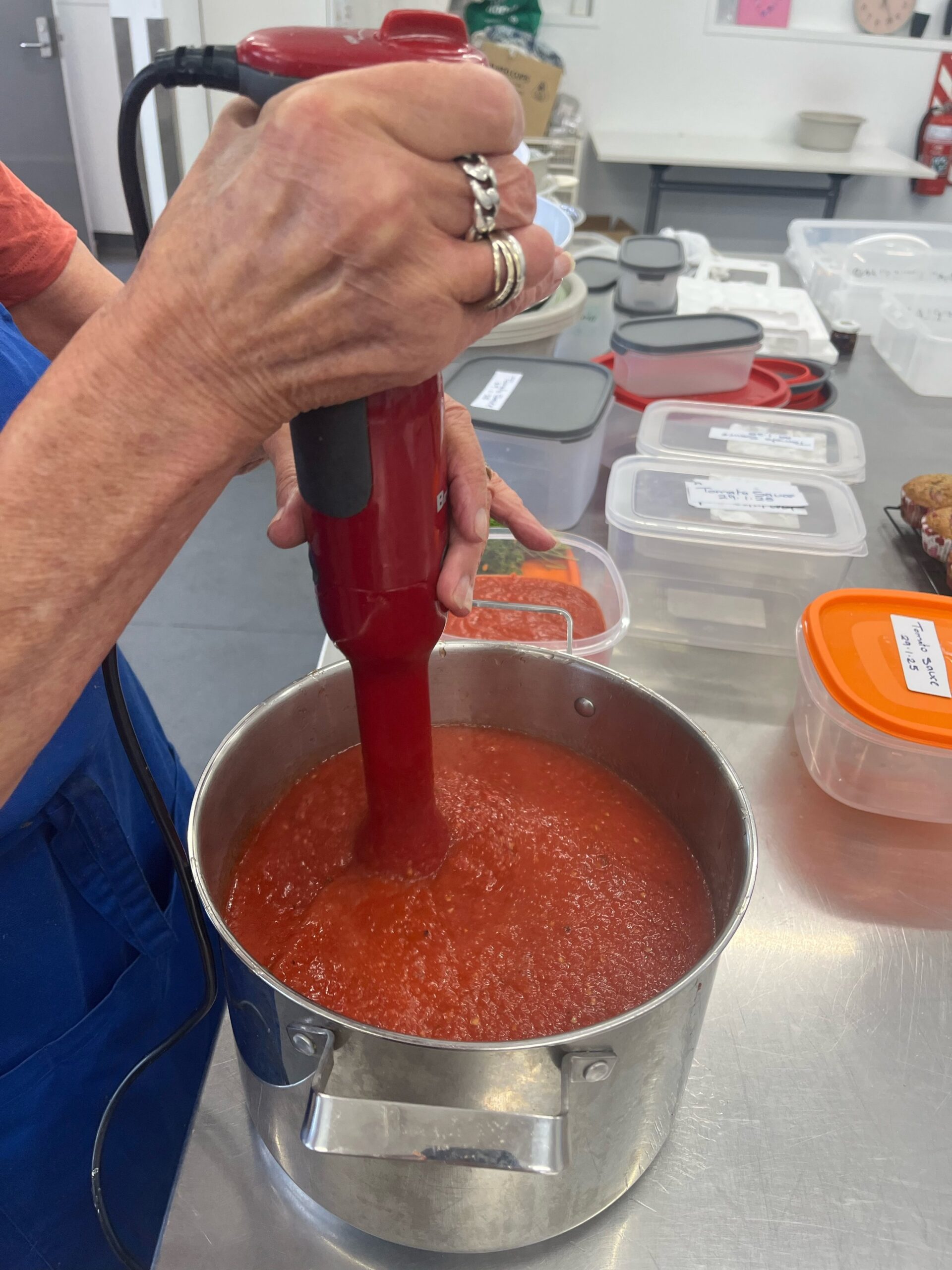
    What truly sets the kitchen apart is its creative use of every donation. Fruit from Fruit Share Adelaide is transformed into everything from pasta sauces and soups to jams, chutneys, and dehydrated snacks. These nourishing creations support a range of programs, including playgroups, open days, and community film nights, ensuring nothing goes to waste.
    As a key part of the City of Port Adelaide Enfield’s Food Relief Network, the Lefevre Community Kitchen works closely with other food programs across the peninsula. What started as an emergency response has evolved into a thriving food hub – one that helps build stronger, more connected neighbourhoods.

    Thanks to the ongoing support of organisations like Fruit Share Adelaide, the kitchen continues to show that food security projects do more than just feed people – they bring people together, share knowledge, and make a lasting difference in the lives of many.

    In recognition of their outstanding efforts, the Food Crew Volunteers received the Minister for Health’s Excellence in Public Health Award in 2022 and were honoured with a City of Port Adelaide Enfield Australia Day Award for Service to the Community in 2024.

    For further information, contact Vanessa at vanessa.gastongardner@cityofpae.sa.gov.au

  • From Seed to Success: Fruit Share Adelaide’s Remarkable First Year

    In the summer heat of January 2024, a small group of dedicated volunteers began what would become one of Adelaide’s most impactful food rescue initiatives. Armed with picking poles, crates, and a vision of reducing food waste while supporting those in need, Fruit Share Adelaide embarked on its first harvest. None of us could have predicted just how much this seedling of an idea would grow over the next twelve months.
    Creating Lasting Impact

    Reducing Food Waste

    By rescuing over 11,650kg of fruit that would have otherwise gone to waste, we’re helping to reduce the environmental impact of food waste while preserving valuable resources.

    Fresh Food Access

    We’ve helped bridge the gap between abundance and need, ensuring that fresh, nutritious fruit reaches those who need it most through our network of 50 food relief organisations.

    Building Connected Communities

    Our initiative has brought together:

    • Generous fruit tree owners sharing their surplus

    • Dedicated volunteers giving their time and energy

    • Food relief organisations providing vital distribution networks

    • Local councils and businesses supporting community action

    Community Education

    Through our workshops, events, and social media presence, we’re helping people learn about:

    • Proper fruit tree care and maintenance

    • Sustainable urban agriculture

    • Food waste reduction

    • Local food security

    The Journey to Establishment

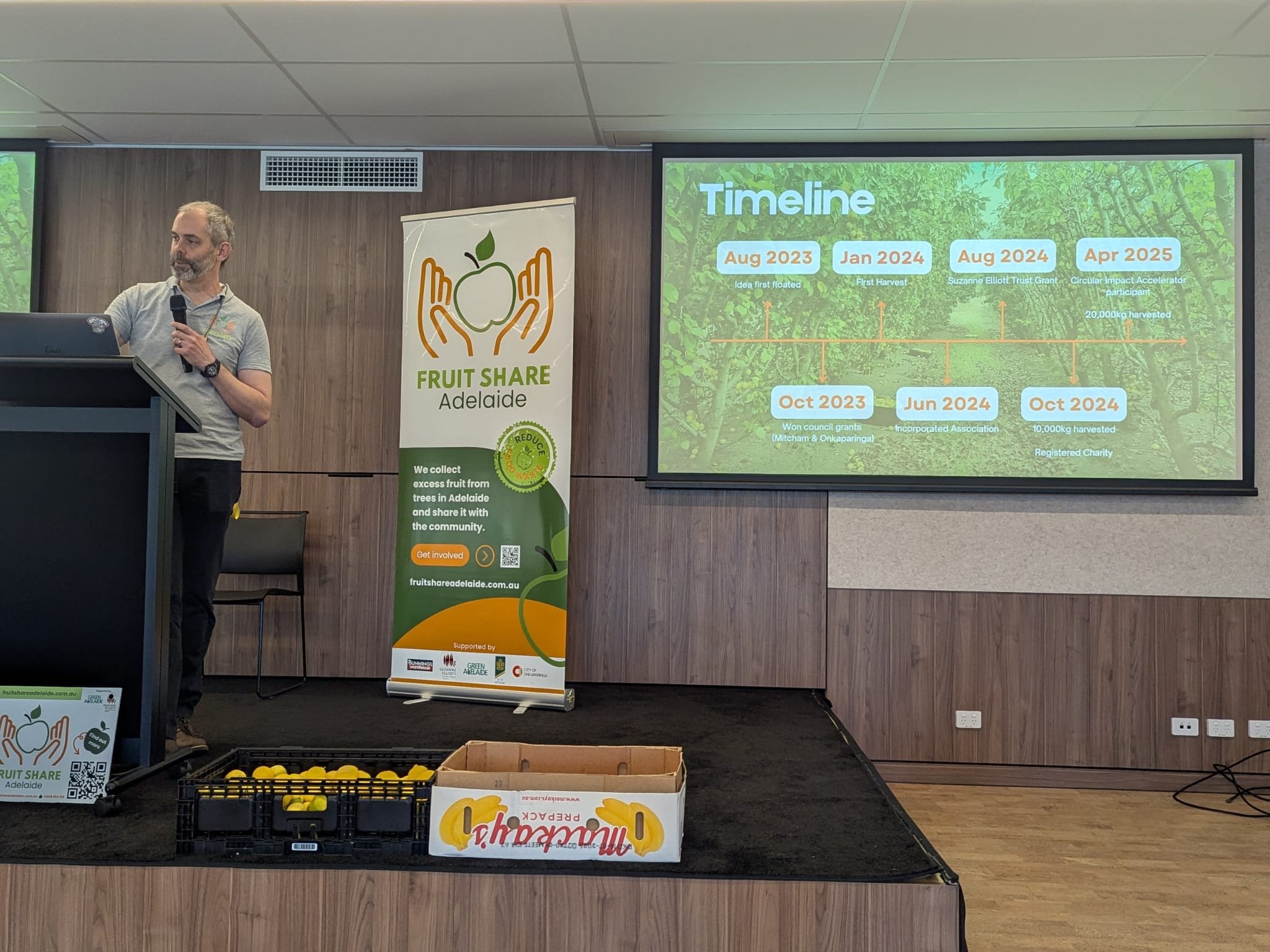
    What started as an informal community initiative quickly blossomed into something much bigger. By June 2024, we had grown enough to become an incorporated association, formalising our commitment to rescuing surplus fruit across Adelaide. This milestone was followed by another significant achievement in October when we received official charity status, strengthening our ability to serve the community.

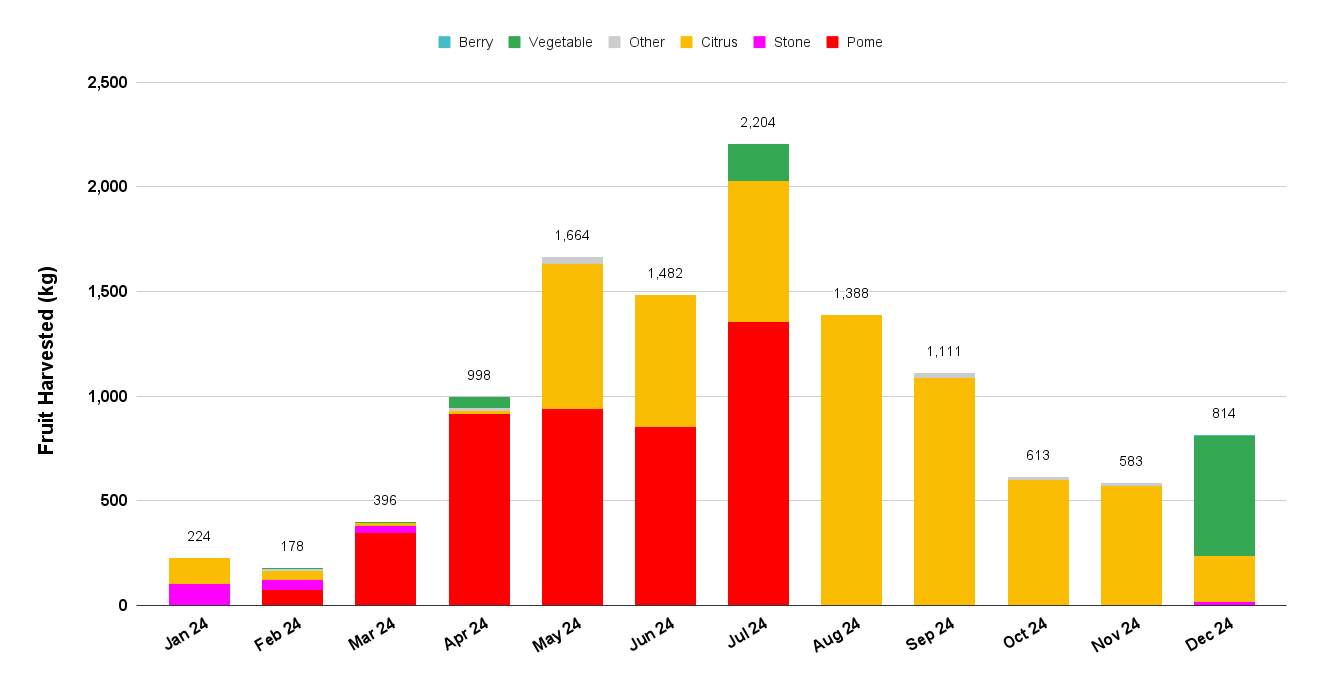
     Fruit Harvested by Month (kg)
    Fruit Harvested by Month (kg)

    A Year of Growth in Numbers

    By year’s end, our total harvest reached an impressive 11,650kg. This success was made possible by our network of:

    • 291 registered volunteers, with 87 actively participating in harvests

    • 96 registered food relief organisations

    • 189 registered properties, of which we harvested at 111 locations

    The Rhythm of the Seasons

    Our harvesting journey followed nature’s calendar throughout 2024:

    Summer (January-February)

    A modest start with smaller harvests as we established our systems and processes.

    Autumn (March-May)

    Our harvests grew substantially, with a diverse range of produce including apples, pears, quinces, and early citrus varieties.

    Winter (June-August)

    Peak harvest season with our largest monthly collections, featuring citrus fruits, late-season apples, and various other produce.

    Spring (September-November)

    Continued strong harvests of citrus fruits, with increasing variety as the weather warmed.

    Summer Return (December)

    Finished the year strong with summer fruits and vegetables, particularly tomatoes from commercial glasshouses.

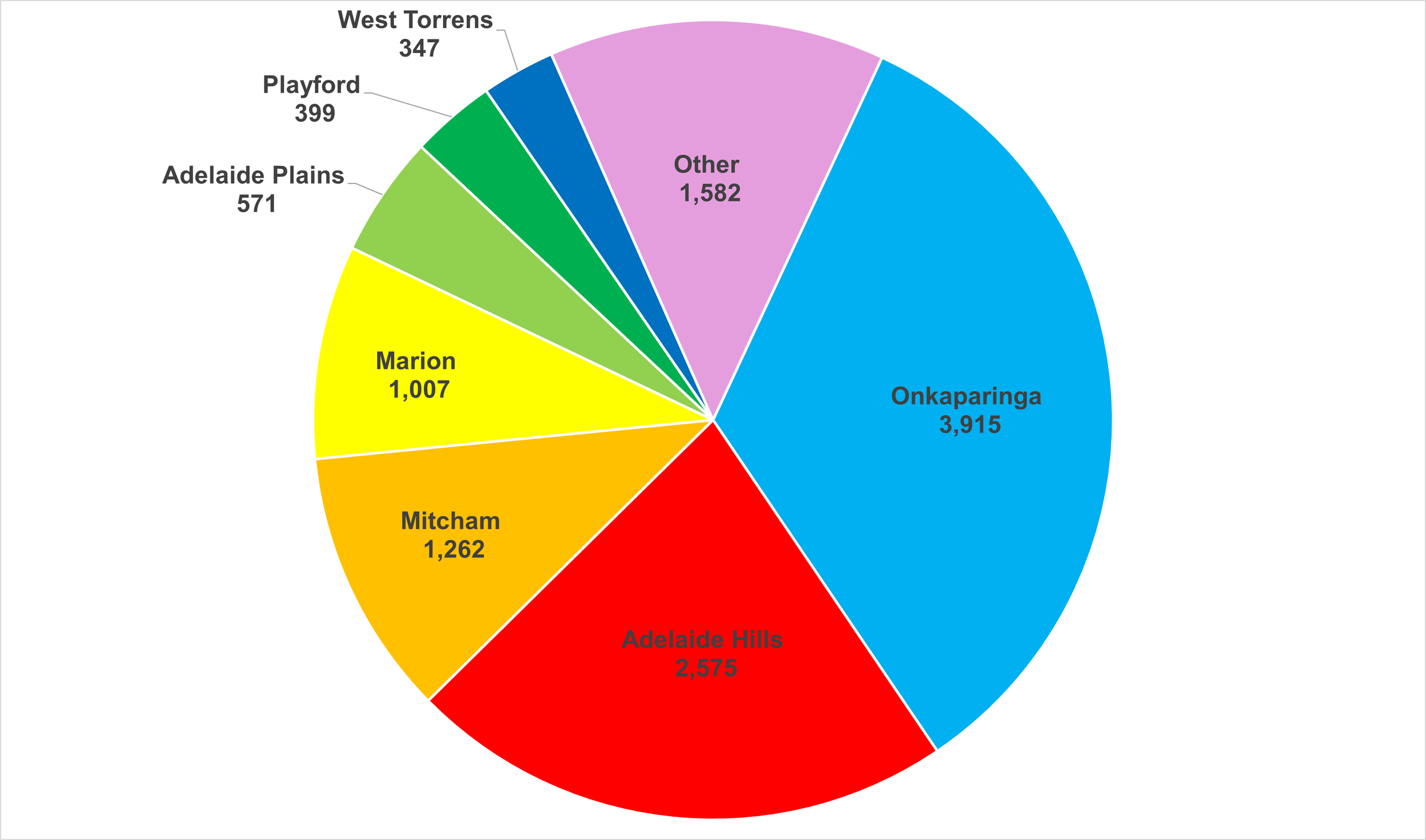
     Produce Harvested by Council (kg)
    Produce Harvested by Council (kg)

    Beyond the Harvest: Community Education and Engagement

    Our mission extends beyond just harvesting fruit. Throughout 2024, we’ve been deeply involved in community education and engagement:

    Winter Pruning Workshops

    In June and July, we held three sold-out pruning workshops led by experts Steve Hoefner and Amanda Fleming. These workshops weren’t just about teaching pruning techniques; they were about empowering people to better care for their fruit trees and understand the importance of sustainable urban agriculture. We kept costs low to ensure accessibility while covering our basic expenses, reflecting our commitment to community education.

    Community Events and Media Presence

    Our presence at the Meadows Country Fair in October, where over 10,000 people attended, helped spread our message to a wider audience. Our founder, Brett Dunstone, became a regular voice on ABC Radio and Coast FM, appearing at least five times to share our story and mission. Brett’s presentation at the Permaculture Convergence in November further helped spread awareness of our work.

    Media Recognition

    Our story has captured the imagination of local media, featuring in:

    • SA Life Gardens & Outdoor Living summer edition

    • Various council newsletters across Onkaparinga, Mitcham, and Marion

    • Multiple radio segments and local publications

    Responsible Food Rescue

    Our commitment to responsible food rescue extends beyond just collecting surplus fruit. We’ve taken a proactive stance on fruit fly management by avoiding harvests within restriction zones in Adelaide’s north. Instead of viewing this as a limitation, we’ve partnered with PIRSA to educate the community about fruit fly management, demonstrating our commitment to long-term agricultural sustainability.

    Our Growing Partnership Network

    The success of our first year wouldn’t have been possible without our supportive partner network:

    Core Supporters

    • Green Adelaide provided crucial insurance coverage and first aid training for our harvest leaders

    • Bunnings contributed harvest equipment and raffle prizes

    • Onkaparinga and Mitcham councils offered both financial support through grants and community outreach opportunities

    • Neutrog provided valuable prizes for our community raffles

    Grant Success

    Building on our initial grants from Mitcham and Onkaparinga councils in late 2023, we secured additional funding through the Suzanne Elliott Trust in August 2024. These grants have been instrumental in:

    • Developing our website

    • Purchasing essential harvest equipment

    • Printing promotional materials

    • Conducting educational workshops

    • Securing event equipment like our marquee

    • Covering incorporation costs

    The Fruits of Our Labour

    The diversity of produce we rescued tells a story of Adelaide’s rich urban orchards:

    Citrus (6,050kg)

    • Lemons: 2,225kg

    • Oranges: 1,865kg

    • Grapefruit: 1,025kg

    • Mandarins: 495kg

    • Limes: 355kg

    Pome Fruit (4,480kg)

    • Apples: 2,440kg

    • Pears: 1,550kg

    • Quinces: 270kg

    • Nashis: 170kg

    Other Produce

    • Vegetables (mainly tomatoes): 800kg

    • Stone fruit: 200kg

    • Specialty fruits (white sapote, macadamias, loquats): 120kg

    Geographic Impact

    Our work spread across 17 council areas, with particular success in Adelaide’s southern regions:

    1. Onkaparinga Council: 3,915kg

    2. Adelaide Hills Council: 2,595kg

    3. Mitcham Council: 1,260kg

    4. Marion Council: 1,010kg

    5. Adelaide Plains Council: 570kg

    Commercial Partnerships

    While backyard harvests formed the backbone of our work (99 harvests yielding nearly 7,000kg), our partnerships with commercial farms proved incredibly productive. Twenty commercial farm harvests yielded 4,700kg, averaging over 230kg per harvest. We’re particularly grateful to:

    • Magarey’s Orchard in Coromandel Valley

    • Lennane Orchard in Montacute

    • Several commercial glasshouses

    Celebrating Success

    In November, we gathered for our End of Year picnic, where over 30 people came together to celebrate our achievements. This event wasn’t just a celebration; it was a testament to the community we’ve built and the relationships we’ve fostered throughout the year.

    Get Involved

    We’re always looking for more people to join our mission! We need:

    • Harvest volunteers

    • Harvest leaders (training provided)

    • Behind-the-scenes support with:

      • Social media management

      • Blog writing

      • Marketing

      • Administration

      • Event coordination

    Looking Forward to 2025

    As we look to the future, we’re excited about:

    • Expanding our partnerships to maximise our impact

    • Offering more educational workshops while maintaining accessibility

    • Growing our volunteer and donor networks

    • Developing new initiatives to reduce food waste

    • Building stronger connections with food relief organisations

    Join Our Journey

    Every kilogram of fruit we rescue represents not just reduced waste, but stronger community connections and improved food security across Adelaide. Whether you have fruit trees that need harvesting, want to volunteer, or are a food relief organisation interested in receiving fresh produce, we invite you to be part of our story.

    Together, we can ensure that no good fruit goes to waste in our community while supporting those who need it most. The success of our first year has laid a strong foundation, but we know this is just the beginning of what we can achieve together.

    If you’d like to get involved or learn more about our work, please visit www.fruitshareadelaide.com.au/get-involved.

    Every person, every tree, and every kilogram of fruit makes a difference in our mission to create a more sustainable and food-secure Adelaide.